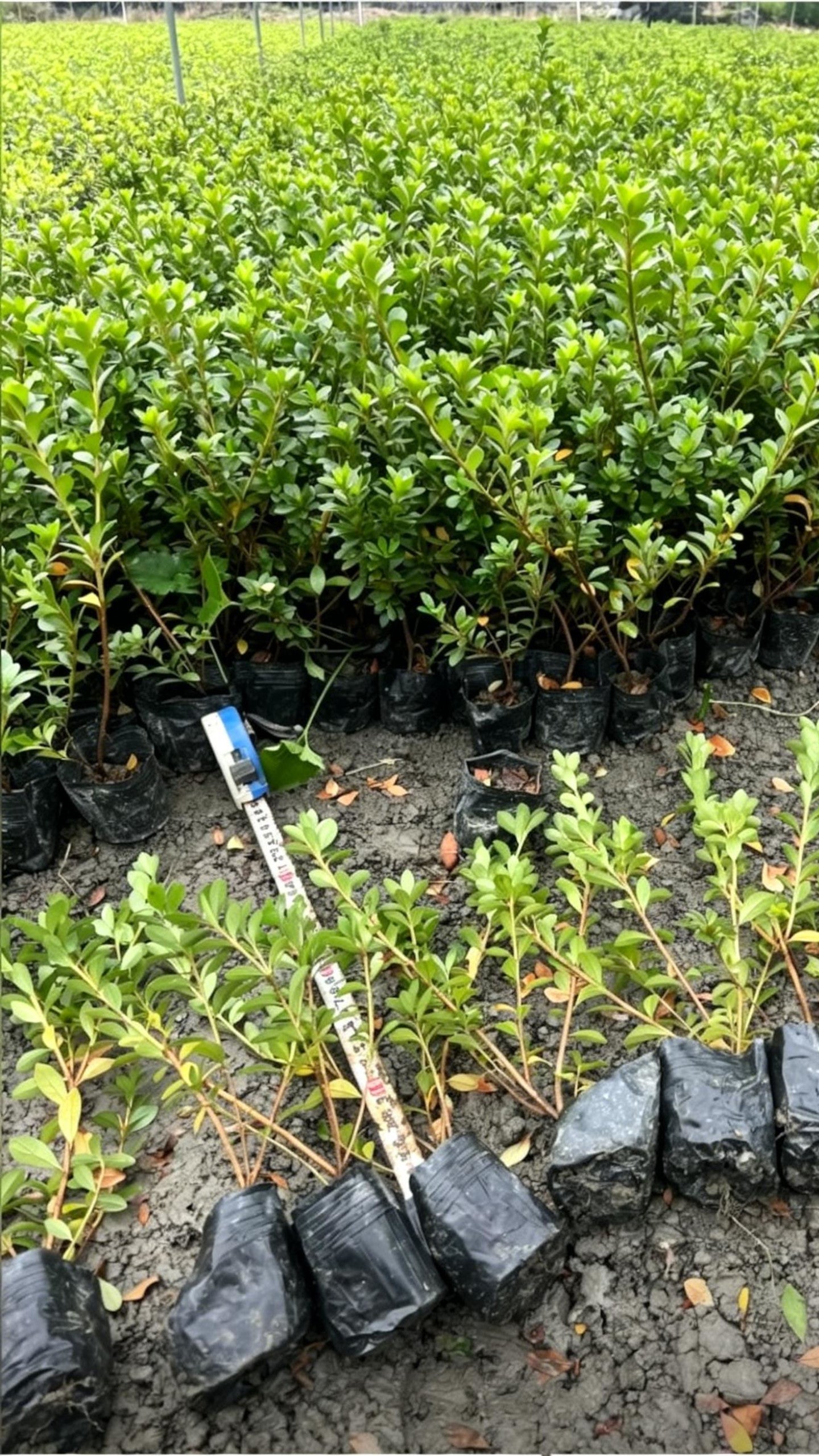
Scientific Name: Rhododendron pulchrum Sweet
Synonyms: Purple Azalea, Belgian Azalea (often refers to hybrids), Azalea
Classification: Ericaceae, Rhododendron · Evergreen Shrub / Flowering Shrub
1. Variety Characteristics
-
Plant Morphology: Evergreen shrub with dense branching. Young branches are green and densely covered with brown fine hairs. Leaves are alternate, elliptic-obovate, thick leathery, dark green on the surface, and sparsely covered with strigose hairs. The crown of Summer Azalea is low and flat, and it is highly tolerant of pruning.
-
Flower Performance: Corolla is broadly funnel-shaped, with 5 lobes, and comes in rich colors (purple-red, red, pink-white, etc.) with dark spots. Flowering period is May–June (about one month later than Spring Azalea, hence the name Summer Azalea).
-
Variety Differences: Summer Azalea leaves are usually smaller and thicker than those of Spring Azalea. The branches are finer and denser, and it grows more slowly, making it suitable for spherical shapes or groundcover color blocks.
2. Ecological Habits
-
Light: Prefers semi-shaded environments (avoid direct scorching sun, especially western sun in summer). Excessive light can cause leaf scorch or weak growth; grows best under dappled shade.
-
Soil: Strictly prefers acidic soil (pH 4.5–6.0). Requires loose, fertile, humus-rich, and well-drained leaf mold or sandy loam. Avoid alkaline soil and waterlogging.
-
Resistance: Prefers cool and humid climates. Not resistant to severe cold (mostly potted in the north; can overwinter in the open ground in the Yangtze River basin). Tolerant of pruning and shapes quickly.
3. Landscape Application Scenarios
-
Groundcover Color Blocks: The most commonly used evergreen flowering color block in gardens. Used as the lower layer of hedges, the front edge of flower borders, or coverage for gentle slopes.
-
Spherical Accents: Pruned into a spherical shape and planted at road intersections, beside steps, or scattered across lawns.
-
Bonsai/Flower Pots: Compact plant with bright flowers, often used for entrance flower pot decoration or indoor potted display.
4. Seedling Quality Indicators (Example — Landscape Groundcover/Spherical Seedlings)
Item Name |
Specifications |
|---|---|
Height (H) |
25–35 cm (Color Block) / 40–60 cm (Spherical) |
Crown Width (P) |
20–30 cm (Color Block) / 40–60 cm (Spherical) |
Branching/Fullness |
Color block seedlings require uniform branching and closed crown; spherical seedlings require roundness without exposing stems |
Container Requirements |
Landscape seedlings are mostly in nutrient pots (diameter 12–16 cm), with roots tightly bound to the substrate |
Quality Requirements |
No yellowing (iron deficiency), no leaf spot disease, no scale insects, clear variety color series |
5. Planting and Maintenance Points
-
Planting Period: Best in spring before budding or in autumn. Container seedlings can be planted year-round except in extreme heat, but need shading to settle.
-
Pruning: Prune promptly after flowering (remove faded flowers and overly dense branches) to favor flowering the following year. Regularly prune color block seedlings to maintain shape.
-
Water and Fertilizer: Prefers moisture but avoids waterlogging. Apply dilute acidic fertilizer (e.g., ferrous sulfate + cake fertilizer water) during the growing season. Control fertilizer in autumn to help overwintering.
-
Soil Maintenance: In alkaline soil areas, regularly irrigate with ferrous sulfate solution to prevent leaf chlorosis (yellowing).