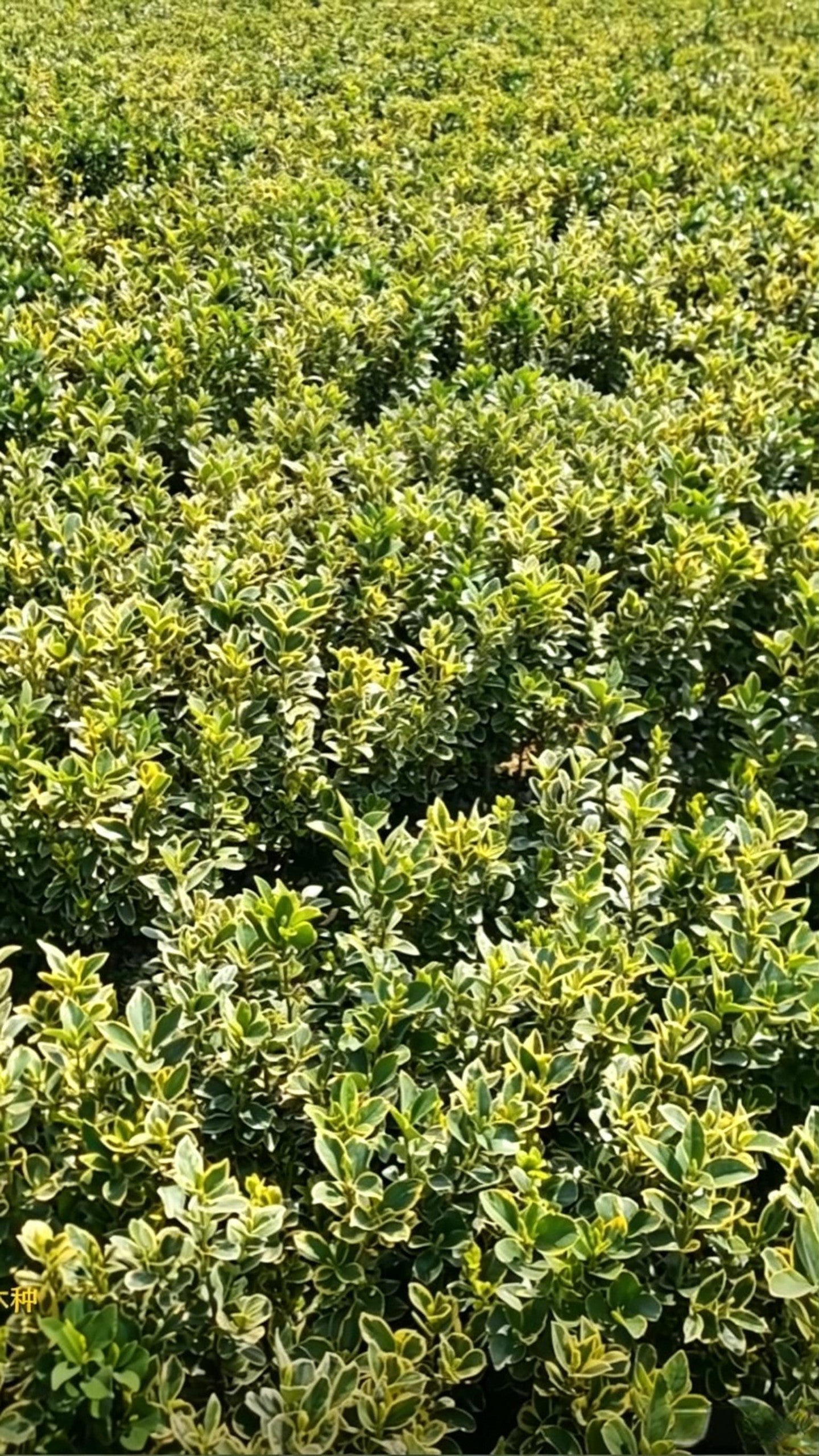
Scientific Name: Euonymus japonicus 'Aureomarginatus'
Common Names: Golden-edged Japanese Spindle, Golden Spindle
Classification: Celastraceae, Euonymus genus · Evergreen shrub / Colorful foliage for blocks and topiary
1. Variety Characteristics
-
Original Species Morphology: Evergreen shrub or small tree, reaching 3–5 m; branchlets quadrangular, green; leaves opposite, leathery, obovate to elliptic, 3–6 cm long, with blunt serrated edges.
-
Colorful Foliage Features: This variety is a cultivated variant of Euonymus japonicus. The leaf margins have a distinct bright golden-yellow narrow border, while the center of the leaf is deep green, providing a clear contrast; new leaves are more brightly golden, while old leaves may fade slightly but remain recognizable.
-
Flowers and Fruit: Axillary cymes with greenish-white flowers (May–June); pinkish capsules with seeds having orange-red arils (September–October).
-
Seasonal Performance: Evergreen year-round; the golden edges are most vibrant in spring and autumn with sufficient light, making it an excellent perennial colorful shrub.
2. Ecological Habits
-
Light: Prefers light, also tolerates semi-shade; sufficient light makes the golden edges brighter; long-term shading leads to narrow borders or even reversion to green leaves.
-
Soil: Not strict about soil; thrives in loose, fertile, well-drained slightly acidic to neutral sandy loam; avoid waterlogged lowlands and saline-alkali soil.
-
Resistance: Cold-tolerant (withstands short-term low temperatures around -15°C, open field south of North China), drought-tolerant, pruning-tolerant, slightly salt-alkali and pollution-tolerant, with strong sprouting and relatively few pests and diseases.
3. Engineering Application Scenarios
-
Color Block Patterns: Combined with Photinia and Boxwood to form classic "red-yellow-green" patterned color blocks, common in road dividers, squares, and park green spaces.
-
Hedges/Dividers: Densely planted as medium-to-low hedges for community perimeters, roadsides, and evergreen barriers for foundation planting zones.
-
Topiary Balls/Columns: Pruned into Golden Boxwood balls or columns, used as solitary or row plantings at entrances and lawn nodes to enhance landscape quality.
-
Foundation Planting: Around building perimeters and as background for flower borders, filling in evergreen base colors.
4. Sapling Quality Indicators
|
Project Name |
Specifications |
|---|---|
|
Height (H) |
30–40 cm / 40–60 cm / 60–80 cm (Color block seedlings) |
|
Crown Width (P) |
≥20–30 cm (Color block) / ≥30–50 cm (Hedge) / ≥50–80 cm (Topiary) |
|
Branching Condition |
Low branching, branch count ≥3–5, dense branches without bare base |
|
Root Ball/Container |
Root balls for field-grown saplings properly formed; nutritional pot diameter 10–15 cm for container seedlings with intact roots |
|
Quality Requirements |
Clear golden edges, normal leaf color, free of scale insects and anthracnose, no serious reversion to green |
5. Planting and Maintenance Key Points
-
Planting Season: Spring and autumn are ideal; container seedlings can be constructed year-round (avoid peak summer heat or extreme cold).
-
Pruning: Prune 1–2 times annually (late spring and early autumn) to control height and width and promote lateral branching; apply fungicide after pruning to prevent infection.
-
Water and Fertilizer: Thoroughly water after planting; apply composite fertilizer during growth season; avoid excessive nitrogen which can narrow the golden edges and cause sparse, large leaves.
-
Pests and Diseases: Focus on controlling scale insects, aphids, and anthracnose; maintain ventilation and promptly remove and destroy infected leaves.