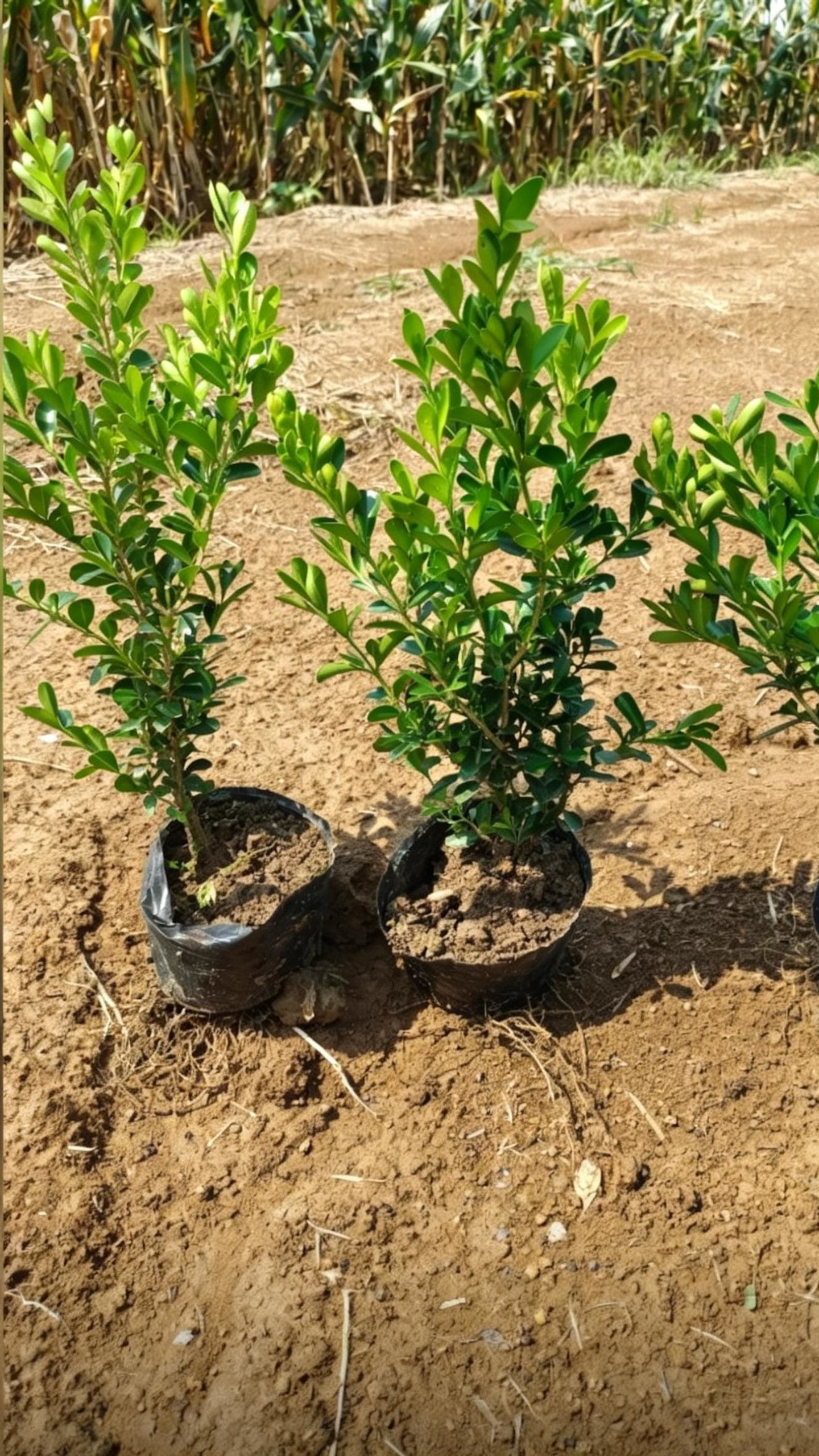
Scientific Name: Buxus sinica var. parvifolia M. Cheng (Small-leaf Boxwood / Boxwood)
Common Names: Small-leaf Boxwood, Boxwood, Chinese Boxwood
Classification: Buxaceae, Buxus – Evergreen Shrub / Hedge, Color Block and Topiary Shrub
1. Variety Characteristics
-
Plant Morphology: Evergreen shrub, usually 0.5–1.5 m high (occasionally up to 2 m); branchlets four-angled, grey-white and smooth; leaves opposite, leathery, obovate or elliptical, 1–3 cm long, 0.5–1.5 cm wide, upper surface dark green and glossy, lower surface pale green; flowers clustered in leaf axils, small and yellow-green (March–April), inconspicuous; capsule near spherical (May–June).
-
Growth Characteristics: Grows extremely slowly, usually only 5–15 cm in height per year; long-lived, very strong sprouting ability, highly tolerant of repeated pruning.
-
Seasonal Interest: Evergreen in all four seasons; some old leaves may turn slightly reddish-brown under low temperature and strong light in autumn and winter; new leaves in early spring are bright green; stable ornamental effect throughout the year.
2. Ecological Habits
-
Light: Light-loving, also tolerates partial shade; leaves are dense and glossy with sufficient light; long-term shade causes slightly loose and soft branches.
-
Soil: Suitable for loose, fertile, well-drained slightly acidic to slightly alkaline sandy loam; avoids long-term waterlogging and saline-alkali compacted soil.
-
Resistance: Relatively cold-hardy (safe overwintering in open ground in the Yangtze River basin, can withstand short-term low temperatures of -15 to -20°C); moderate drought resistance; extremely tolerant of pruning, strong suckering ability, shallow roots; has some resistance to harmful gases like sulfur dioxide, suitable for urban road isolation belts.
3. Engineering Application Scenarios
-
Patterned Color Blocks: Combined with Photinia x fraseri, Ligustrum japonicum 'Howardii', and Loropetalum chinense to form the classic "red-yellow-green" pattern, often used in road dividers, plazas, and park green spaces.
-
Low Hedges / Partition Hedges: Densely planted as low evergreen ball barriers (30–60 cm height), used for residential walls, roadsides, and flower bed edges.
-
Topiary Balls/Pillars/Animals: After years of pruning and shaping into boxwood balls, clouds, square pillars, or animal shapes, it is suitable for Chinese courtyards, classical gardens, and entrance nodes.
-
Foundation Planting: Around building foundations and stairs to provide an evergreen base color and hide structure bases.
4. Nursery Stock Quality Indicators
① Color Block / Hedge Container Seedlings
|
Item Name |
Specifications |
|---|---|
|
Age |
1–2 year old cutting seedlings |
|
Height (H) |
15–25 cm / 25–35 cm / 35–45 cm (by design) |
|
Crown Width (P) |
≥ 10–20 cm, low branching, number of branches ≥ 3–5, dense branches |
|
Container Requirements |
Nutritional cup diameter 8–12 cm, roots not girdled, intact original soil |
|
Quality Requirements |
Leaves dark green, no damage from Cydalima perspectalis, no scale insects, slow-growing but healthy |
② Topiary Ball
|
Item Name |
Specifications |
|---|---|
|
Crown Width (P) |
P40 / P60 / P80 / P100 / P120 cm |
|
Height (H) |
≈ 0.8–1.0 times the crown width, round and full shape |
|
Root Ball Size |
Crown width ≥ 80 cm: root ball ≈ 1/3 of crown width, wrapped with straw rope |
|
Quality Requirements |
Maintenance pruning completed (specify rough/finished), dense interior, no obvious "bald spots" |
5. Planting and Maintenance Points
-
Planting Season: Best before or after spring budding; container seedlings can be planted year-round (avoid extreme summer heat). Bare-root seedlings must have enough soil around the heart.
-
Pruning: Prune 1–2 times a year (lightly in late spring and early autumn to maintain shape), heavy pruning should be done in early spring; a single pruning amount should be ≤ 1/3. Heavy pruning in late autumn can promote dense branching the following year.
-
Water and Fertilizer: Thorough initial watering; apply decomposed organic fertilizer or compound fertilizer during the growing season, avoid excessive nitrogen which causes leggy growth; avoid root rot from waterlogging.
-
Pests and Diseases: Focus on controlling Cydalima perspectalis (larvae eat young leaves), scale insects, and powdery mildew; maintain good ventilation and treat promptly.