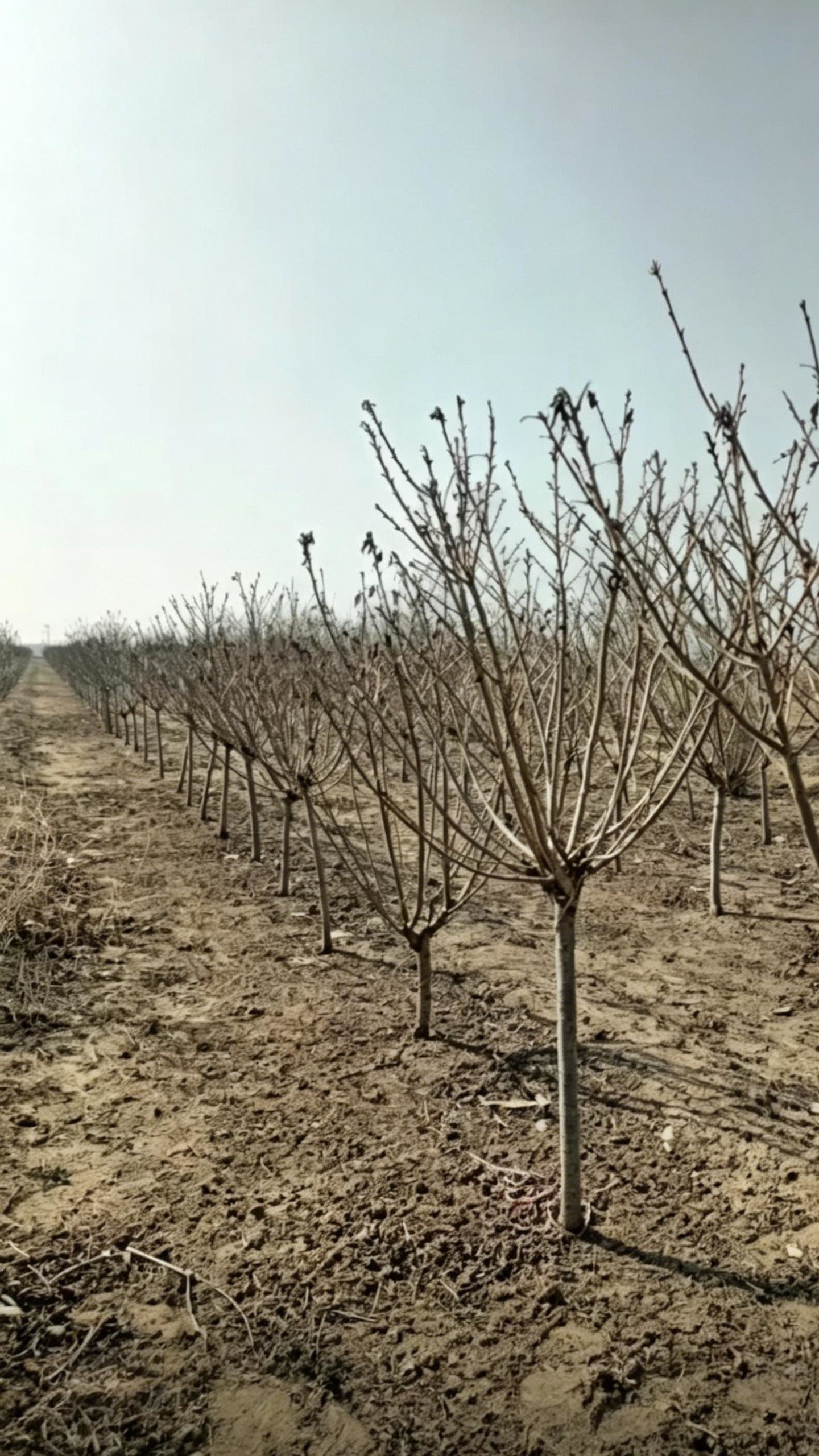
Cherry Blossom (Prunus species)
Cherry Blossom (Prunus species)
Scientific Name: Commonly used are Prunus × yedoensis Matsum. (Yoshino Cherry), Prunus serrulata Lindl. (Oriental Cherry / Japanese Late Cherry), etc.
Aliases: Japanese Cherry, Mountain Cherry, Fukushima Cherry
Classification: Rosaceae, Cerasus - Deciduous small tree / Spring flowering tree
1. Varietal Characteristics
-
Plant Morphology: Deciduous small tree, 4–10 m tall; crown umbrella-shaped and spreading, bark purple-brown with horizontal lenticels ("snake-skin pores"), twigs smooth; leaves elliptical-ovate to obovate, 5–12 cm long, margins with fine aristate double serrations, newly unfolding leaves often have a copper-red tint.
-
Flower Performance:
-
Yoshino Cherry (Representative Early Cherry): Umbel-like inflorescence, flowers white or light pink, single petals, 3–3.5 cm in diameter; flowers open before or with leaves, blooming period from March to early April.
-
Japanese Late Cherry (P. serrulata 'Lannesiana' / Yaezakura, etc.): Flowers double, pink or near white, often with long pedicels, large flowers (4–5 cm in diameter); blooming period from mid-to-late April to early May, usually flowers with or after leaves.
-
-
Fruit: Drupe near-spherical, black (not for consumption).
-
Seasonal Performance: View abundant flowers in spring → dense green shade in summer → leaves turn yellow-orange or reddish-brown in autumn → view the bark with horizontal lenticels and branch posture in winter.
2. Ecological Habits
-
Light: Sun-loving species, prefers full sun; ample light ensures abundant and vibrant flowers; light partial shade is acceptable, but flower volume will decrease.
-
Soil: Prefers loose, fertile, and well-drained slightly acidic to neutral sandy loam (pH 5.5–6.5 is ideal); avoid waterlogging, avoid salinity and alkalinity, avoid heavy clay soil (prone to root rot).
-
Resistance: Relatively cold-hardy (can withstand temperatures around -15°C to -20°C depending on variety), not drought-tolerant, not wind-tolerant (shallow root system); very sensitive to smoke and harmful gases.
3. Engineering Application Scenarios
-
Cherry Blossom Paths/Street Trees: Planted in rows along garden paths, lakesides, or residential roads to create the spectacular "Cherry Blossom Rain" or "Cherry Blossom Avenue" landscape.
-
Solitary Planting/Group Planting: Solitary planting on lawns or group planting as forest stands, forming a spring focal point; it is a core species for modern urban park landscaping.
-
Themed Gardens: Specialized cherry blossom gardens or "Spring Gardens," creating seasonal themed viewing areas.
4. Sapling Quality Indicators
|
Project Name |
Specification Parameters |
|---|---|
|
DBH / Meter Diameter |
Φ 3 cm / Φ 5 cm / Φ 6 cm (Graded by design) |
|
Height (H) |
250–400 cm (Matching DBH) |
|
Crown Width (P) |
≥ 150–300 cm, uniform crown, clear layering of main branches, no lopsidedness |
|
Branching Point |
Uniform and neat (usually 100–150 cm or as per design), 3–5 main branches |
|
Earth Ball Specification |
8–10 times the DBH, earth ball complete and not falling apart |
|
Quality Requirements |
Flat healing of the graft union (rootstock mostly seedling mountain cherry/cherry), no quarantine pests or diseases, no serious mechanical damage to the bark, specify the cultivated variety (early/late cherry) |
5. Planting and Maintenance Points
-
Planting Period: Best from after autumn leaf fall to early spring budding (soil temperature ≥5°C); container seedlings can be appropriately extended; avoid the peak heat of mid-summer.
-
Water and Fertilizer: Thoroughly water after planting; apply decomposed organic fertilizer or compound fertilizer 2–3 times a year during the growing season, and extra phosphorus and potassium fertilizer before flowering; shallow-rooted, pay attention to drought prevention, avoid waterlogging.
-
Pruning: Lightly thin out dense, diseased, or inward-growing branches during winter, avoid heavy pruning of large branches (which can trigger gummosis); do not remove fruits after flowering (not for consumption).
-
Pest and Disease Control: Focus on controlling aphids, scale insects, leaf hole disease, and gummosis; gummosis is often related to wounds and waterlogging, so standard operations and smooth drainage are necessary.