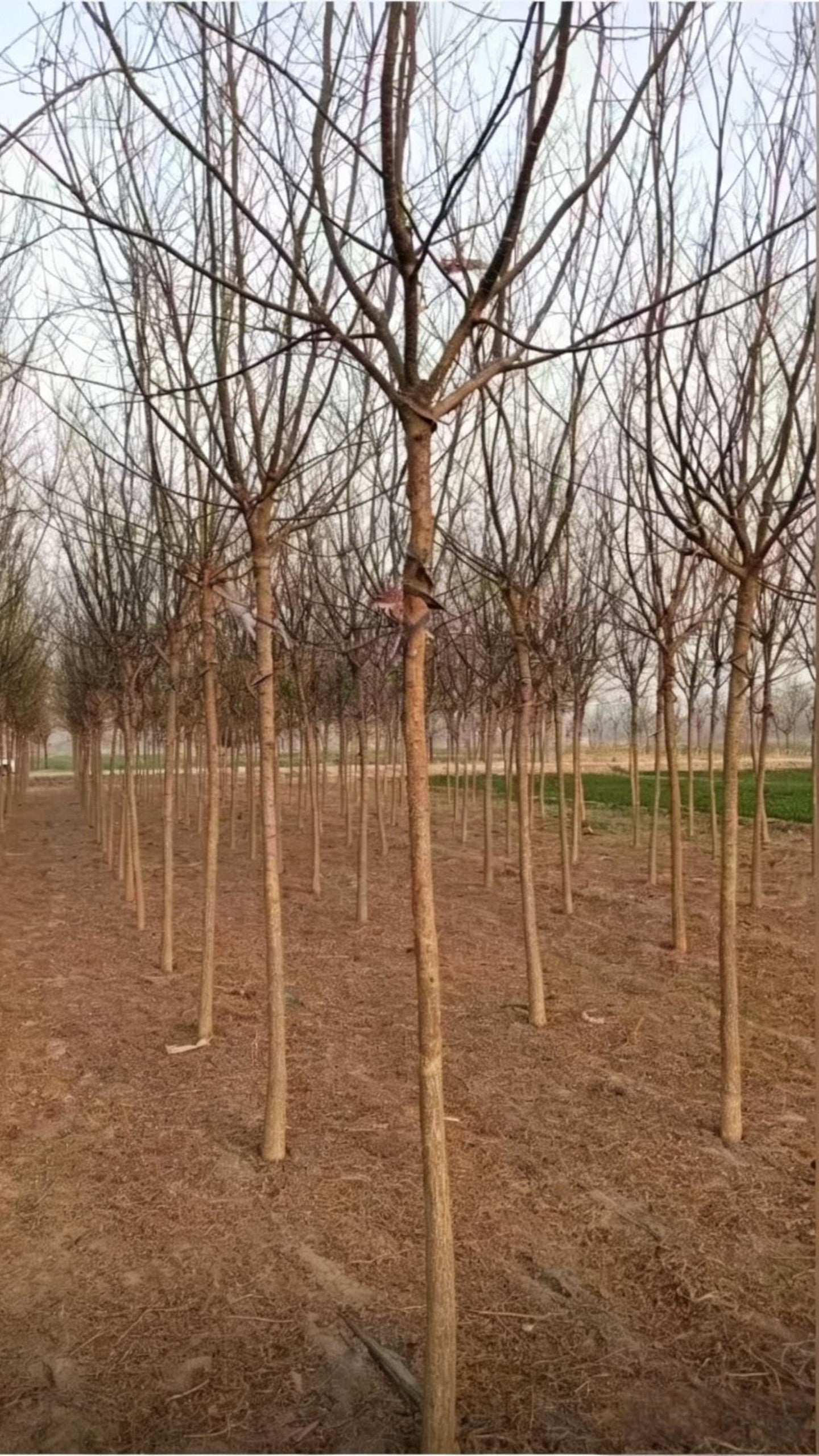
Scientific Name: Styphnolobium japonicum (L.) Schott (formerly Sophora japonica L.)
Common Names: Pagoda Tree, Scholar Tree, Chinese Scholar Tree
Classification: Fabaceae, Styphnolobium · Deciduous Tree / Street and Shade Tree
1. Varietal Characteristics
-
Morphology: Deciduous tree, height 15–25(up to 30) m; crown broad-ovate or flat-spherical; bark grayish-black, longitudinally fissured; twigs green (current year), grayish-brown (old); leaves alternate, odd-pinnate, with 7–17 leaflets, ovate to ovate-lanceolate, 2.5–5 cm long, entire margin, dark green and glossy surface.
-
Flowers: Terminal panicles, butterfly-shaped corolla, creamy white or pale yellow, fragrant; blooming period July–August (late summer to early autumn, later than most spring-flowering trees); pods bead-like, fleshy, yellowish-green when ripe, persistent through winter.
-
Seasonal Performance: Dense green shade in summer → golden yellow leaves in autumn → bead-like pods and fissured bark in winter; an excellent summer-shade and autumn-color tree.
2. Ecological Habits
-
Light: Heliophilous species, prefers full sun; grows robustly with abundant blooms under full light; tolerates light partial shade.
-
Soil: Highly adaptable to soil types; thrives in loose, fertile, well-drained slightly acidic to neutral sandy loam; tolerates light salinity, poor soil, and drought; avoids waterlogged lowlands.
-
Resistance: Extremely cold-hardy (withstands temperatures below -20°C); drought-tolerant, pruning-tolerant, with strong budding capacity; highly resistant to harmful gases (SO2, Cl2); excellent dust and noise reduction effects; few pests and diseases (occasional Geometrid larvae, aphids, or canker).
3. Engineering Application Scenarios
-
Street Tree: Used along urban main roads, highways, and national roads; dense crown provides excellent shade.
-
Shade Tree: Solitary or group planting in parks, squares, and residential green spaces to provide thick summer shade.
-
Industrial Greening: Strong pollution resistance makes it suitable for chemical plants, power plants, and mining areas.
-
Specialized Gardens: Native plant gardens, autumn-color gardens, and legume family collections.
4. Seedling Quality Indicators
|
Item Name |
Specifications & Parameters |
|---|---|
|
DBH / Caliper |
Φ 5 cm / Φ 6 cm / Φ 7 cm / Φ 8 cm (Graded by design) |
|
Height (H) |
200–400 cm (Matched to DBH) |
|
Crown Width (P) |
≥ 200–300 cm, symmetrical and full crown, no leaning |
|
Branching Point |
Uniform and neat (usually 200–250 cm or per design), 3–5 main branches layered |
|
Root Ball Size |
8–10 times the DBH, standard straw rope wrapping, complete root system |
|
Quality Requirements |
Straight trunk without sharp bends, bark free of mechanical damage, no trunk-boring pests (Longhorn beetles), no canker/rot |
5. Planting and Maintenance Key Points
-
Planting Period: Best from leaf-fall in autumn to before budding in early spring; container seedlings can extend the construction period (avoiding peak summer heat).
-
Water and Fertilizer: Thoroughly water after planting; apply decomposed organic or composite fertilizer 2–3 times during the growing season; drought-tolerant but grows faster if soil is kept moist; avoid waterlogging to prevent root rot.
-
Pruning: During winter dormancy, thin out crowded, crossing, or inward-growing branches to cultivate a straight main trunk; light pruning is sufficient, avoid heavy pruning.
-
Pest Control: Focus on controlling Geometrid larvae (inchworms), aphids, and canker; seal and treat trunk-boring pests immediately upon discovery.