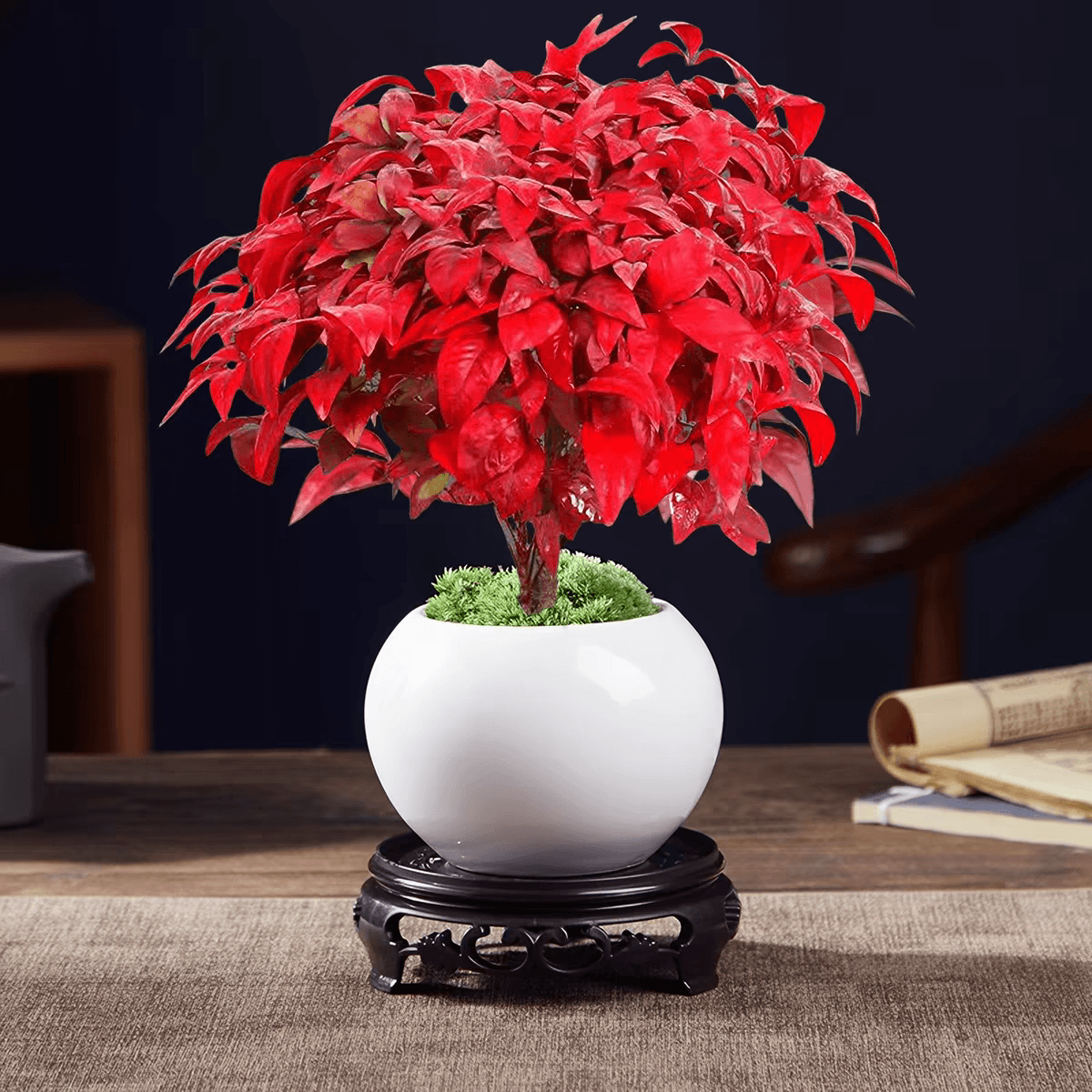
Scientific Name: Nandina domestica 'Fire Power' (Nandina cultivar)
Common Names: Fire Power Nandina, Red-leaf Nandina
Classification: Berberidaceae, Nandina — Evergreen Dwarf Shrub / Colorful Foliage & Groundcover
1. Variety Characteristics
-
Plant Morphology: Evergreen small shrub, typically 0.3–0.6 m tall, clustered with few branches, extremely short internodes (0.1–0.5 cm), compact plant shape. 2–3 times pinnately compound alternate leaves, with ovate or ovate-oblong leaflets (2–5 cm), leathery, and entire margins. New spring/summer leaves are dark red turning green or reddish; in late autumn (temp < 5°C for a week), they turn bright flame red, lasting until the following spring.
-
Flowers and Fruit: Terminal panicles with small white flowers (spring to early summer); spherical bright red berries (rarely seen). The main ornamental feature is the autumn/winter red foliage.
-
Seasonal Performance: Deep green/reddish in spring/summer → bright red in late autumn/winter (peak Dec to Mar) → dark red new leaves in spring. Evergreen year-round.
2. Ecological Habits
-
Light: Prefers partial shade to full sun; foliage is more brilliant red in full sun during autumn/winter. In full shade, the color is greener; avoid persistent western exposure in summer to prevent leaf scorch.
-
Soil: Prefers loose, fertile, well-drained slightly acidic to neutral loam (pH 6.0–7.5); adapts to weakly alkaline soils; avoid waterlogging.
-
Temperature: Optimal 15–28°C; tolerates short-term -15 to -17°C (hardy in the Yellow River basin and south); heat tolerant to 35–40°C.
-
Resistance: Very few pests and diseases (occasionally leaf spot or aphids); contains alkaloids (toxic if ingested, keep away from children/pets); tolerates pruning and low maintenance.
3. Engineering Applications
-
Understory/Groundcover: Planted under tall trees or in shaded areas north of buildings as evergreen colorful groundcover to fill winter landscape gaps.
-
Color Blocks/Borders: Combines with Golden Privet, Littleleaf Boxwood, or Mondo Grass for strong color contrast in autumn and winter.
-
Dots in Flower Borders: Planted in clusters or with rocks and walls.
-
Container Display: 1-gallon to 2-gallon pots for commercial entrances, residential entries, or balconies.
4. Nursery Stock Quality Standards (Example — Color Block/Groundcover Pots)
| Project Name | Specifications |
|---|---|
| Age | 1–2 year old cuttings/tissue culture container seedlings |
| Height (H) | 15–25 cm (dense color blocks) / 30–40 cm (flower borders/clumping) |
| Crown Width (P) | ≥ 15–20 cm (color blocks) / ≥ 25–30 cm (flower borders) |
| Branching | Clustered, ≥ 3–5 branches, no bare base, compact and full plant shape |
| Pot Specs | Pot diameter 10–12 cm (1 gallon) or 15 cm, well-developed roots, no root circling |
| Quality Requirements | Dark green leaves or with a reddish tint (no severe reversion to green), no severe disease spots, no scale insects; specify variety as Fire Power Nandina (N. domestica 'Fire Power') |
Note: It is recommended to specify ① Fire Power Nandina (autumn/winter red leaf variety) ② Pot size ③ Height/Crown width range ④ Planting density (color blocks 9–16 plants/m², flower borders 6–9 plants/m²). Red foliage effect in autumn/winter is a key indicator.
5. Planting and Maintenance
-
Planting Period: Container seedlings year-round (best in spring/autumn); avoid peak summer heat.
-
Pruning: Generally no heavy pruning; remove dense, dead, or weak branches after flowering or in early spring; rejuvenate every 3–4 years.
-
Water and Fertilizer: Deep watering after planting; keep moist but avoid waterlogging; organic/compound fertilizer in spring/autumn.
-
Pests and Diseases: Rare; occasionally scale insects or anthracnose; maintain ventilation; remove old leaves.