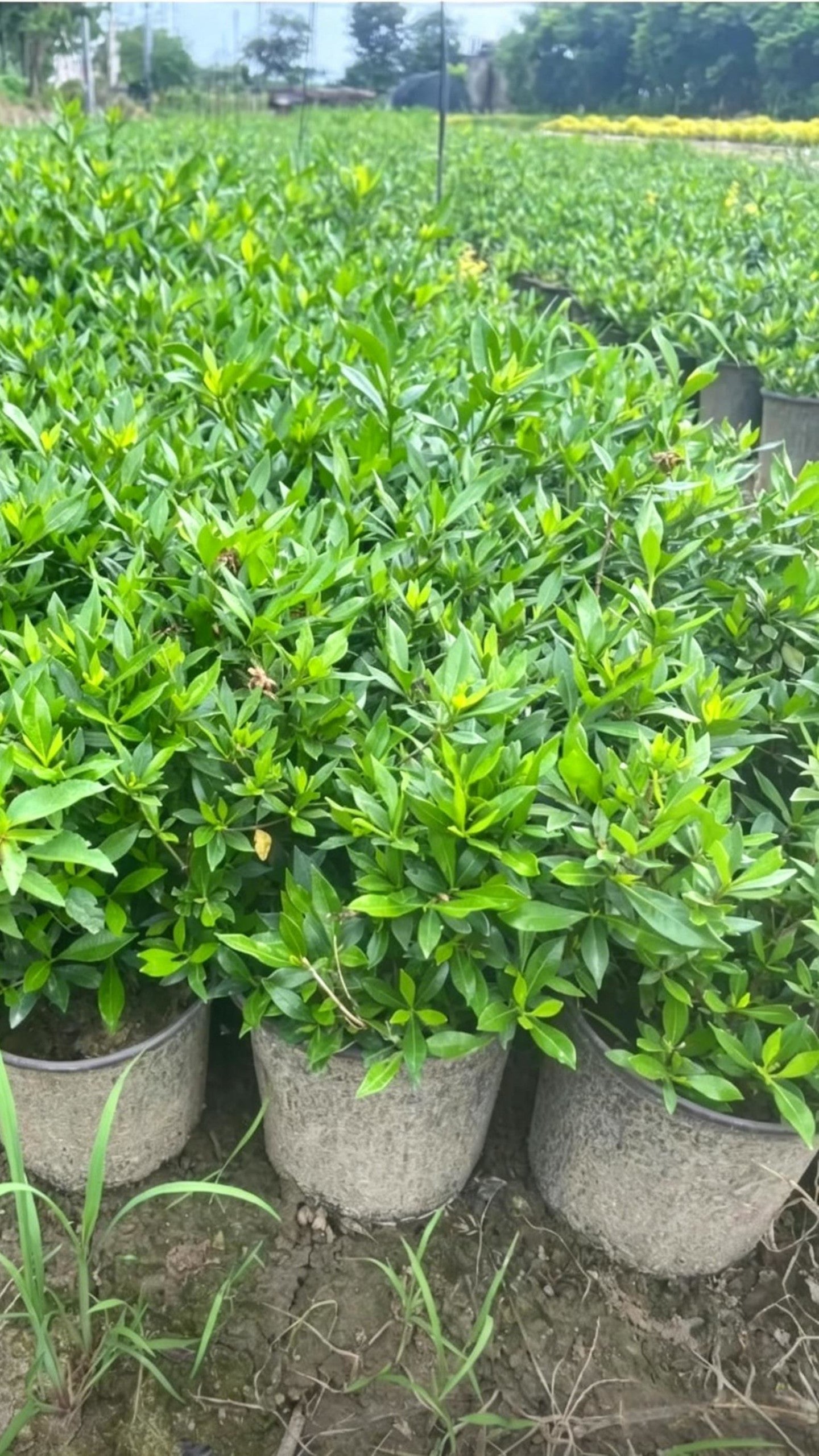
Scientific Name: Gardenia jasminoides Ellis var. radicans (Dwarf/Small-leaf Gardenia) or G. jasminoides 'Prostrata'
Common Names: Creeping Gardenia, Cape Jasmine, Dwarf Gardenia
Classification: Rubiaceae, Gardenia genus · Evergreen shrub / Fragrant flowering shrub and groundcover color block plant
1. Variety Characteristics
-
Plant Morphology: Evergreen dwarf shrub, usually 0.3–0.6 (occasionally up to 1) m high, with dense branches; leaves opposite, oblanceolate or obovate, small leaf type (2–4 cm long, 0.8–1.5 cm wide), leathery, glossy, and dark green; flowers solitary or axillary, salverform corolla, white, double or single, intensely fragrant, flowering from May to July (can extend to September in warm regions); possesses yellow berries (occasionally seen).
-
Difference from Original Species: The original Gardenia (G. jasminoides) is 1–1.5 m high with larger leaves and flowers; the small-leaf variety is a dwarf variant, with smaller leaves, denser branching, and better tolerance to pruning, making it more suitable for color blocks and groundcover.
-
Seasonal Performance: Evergreen year-round, with dense and fragrant white flowers in early summer; old leaves are dark green and glossy.
2. Ecological Habits
-
Light: Prefers light, also tolerates semi-shade (can bloom normally under partial sun); direct strong light may cause slight scorching of leaf tips, so provide appropriate shade in summer afternoons.
-
Soil: Strictly prefers acidic soil (pH 5.0–6.5), loose, fertile, rich in humus, well-drained sandy loam or mountain soil; avoid alkaline soil (causes chlorosis) and waterlogging.
-
Temperature and Humidity: Optimum growth temperature is 18–28°C; can tolerate short-term low temperatures of -5 to -8°C (mostly open field in Central and East China; container cultivation indoors is recommended for North China); prefers humid air.
-
Resistance: Tolerates pruning, strong sprouting ability; common pests are scale insects, aphids, and red spider mites; diseases include chlorosis (caused by alkaline soil) and leaf spot.
3. Engineering Application Scenarios
-
Flower Borders/Color Block Edging: Combined with Golden Boxwood, Loropetalum, and Boxwood as foreground edging color blocks, providing fragrant white flowers in early summer.
-
Groundcover: Planted densely as groundcover in shaded or semi-shaded areas, filling gaps under trees and shrubs to suppress weeds.
-
Foundation Planting: Around building perimeters, beside steps, and along garden paths as low hedge dividers.
-
Containers/Specialty Gardens: Potted for symmetrical display at hotel entrances and terraces; accent in fragrant plant specialty gardens.
4. Sapling Quality Indicators
|
Project Name |
Specifications |
|---|---|
|
Sapling Age |
1–2 year old cutting seedlings |
|
Height (H) |
15–25 cm / 25–35 cm (as per design) |
|
Crown Width (P) |
≥15–20 cm, low branching, branch count ≥3–5, dense branches without bare base |
|
Container Requirements |
Nutritional cup diameter 8–10 cm / 10–12 cm, roots not pot-bound, original soil intact |
|
Quality Requirements |
Dark green leaves (no iron-deficiency chlorosis), free of scale insects and sooty mold, variety confirmed as small-leaf/dwarf Gardenia |
5. Planting and Maintenance Key Points
-
Planting Season: Best before or after sprouting in spring and autumn; container seedlings can be constructed year-round (avoid peak summer heat).
-
Pruning: Light pruning after flowering or in early spring to maintain shape and promote branching; avoid heavy heading back.
-
Water and Fertilizer: Thoroughly water after planting; keep soil moist but avoid waterlogging during the growth period; apply decomposed cake fertilizer water or acidic composite fertilizer in spring and autumn, avoid excessive nitrate nitrogen fertilizer; regularly water with iron sulfate in alkaline areas to prevent chlorosis.
-
Pests and Diseases: Focus on controlling scale insects and red spider mites; if iron-deficiency chlorosis occurs, promptly spray chelated iron and irrigate with acidifying agents.