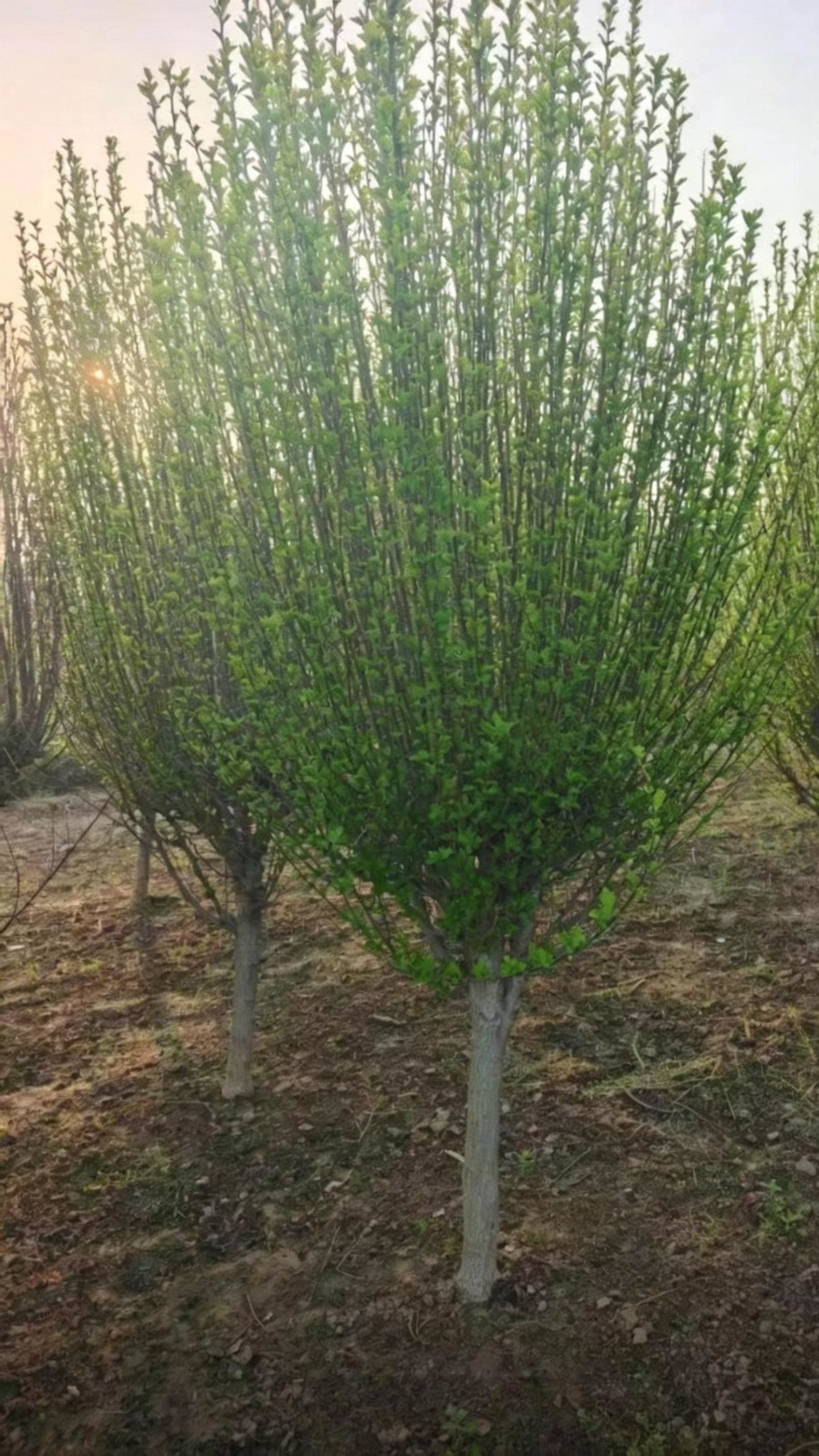
Scientific Name: Hibiscus syriacus L.
Aliases: Althea, Rose of Sharon, Shrub Althea
Classification: Malvaceae, Hibiscus - Deciduous shrub or small tree / Summer-Autumn flowering shrub
1. Varietal Characteristics
-
Plant Morphology: Deciduous shrub or small tree, 2–4 (up to 6) m tall; twigs grayish-brown, young twigs covered with downy hair; leaves alternate, rhombic to triangular-ovate, 3–10 cm long, margins with irregular coarse blunt teeth or lobes, often 3-lobed, leaf surface rough.
-
Flower Performance: Flowers solitary in the leaf axils at the end of branches, short pedicels; corolla bell-shaped, 5–8 cm in diameter, 5 petals (more in double varieties); very rich flower colors: white, pink, red, purple, blue-purple, and variegated with borders, the center often has deep red markings; blooming period from July to October (continuous blooming in summer and autumn), individual flowers open in the morning and fall in the evening, but the flowers open sequentially, so the overall blooming period is very long.
-
Fruit: Capsule ovoid, densely covered with stellate downy hair, seeds kidney-shaped, brown when ripe.
-
Seasonal Performance: Continuous flowers in summer and autumn → autumn leaves turn yellowish-brown → winter branches are grayish-brown; it is an important summer and autumn flowering shrub.
2. Ecological Habits
-
Light: Sun-loving species, prefers full sun; ample light ensures a large volume of flowers and vibrant colors; slight partial shade is acceptable, but too much shade results in fewer and paler flowers.
-
Soil: Strong adaptability to soil, thrives in loose, fertile, and well-drained slightly acidic to neutral sandy loam; tolerates slight salinity and alkalinity, tolerates poor soil; avoid long-term waterlogging.
-
Resistance: Cold-hardy (can withstand temperatures around -20°C, cultivated in open ground in North China and further south), heat-tolerant, drought-tolerant, pruning-resistant, strong sprouting ability; few pests and diseases (occasionally aphids, leaf rollers, leaf spot disease).
3. Engineering Application Scenarios
-
Flowering Hedges/Separation Hedges: Planted densely as medium to tall hedges (height 1.5–2.5 m), blooming in summer and autumn to provide both separation and ornamental value.
-
Group Planting/Flower Borders: Planted in groups on the edge of lawns or in garden corners, or combined with other flowering shrubs to form a multi-layered flower border.
-
Street Greening/Container Planting: Suitable for street flower beds or high-end container seedlings, beautifying the urban landscape in summer and autumn.
4. Sapling Quality Indicators
① Engineering Container Seedlings (for Hedges/Color Blocks)
|
Project Name |
Specification Parameters |
|---|---|
|
Sapling Age |
1–2 year old cuttings |
|
Height (H) |
60–80 cm / 80–100 cm / 100–120 cm (per design) |
|
Crown Width (P) |
≥40–60 cm, low branching, number of branches ≥3–5 |
|
Container Requirements |
Nutrition pot diameter 15–20 cm / Gallon pot 2–3 gal, roots not bound |
|
Quality Requirements |
Normal leaf color, no serious leaf spot disease, specify flower color (pink/red/white/purple etc.) |
② Large Field Seedlings (for Solitary/Street Planting)
|
Project Name |
Specification Parameters |
|---|---|
|
Height (H) |
150–200 cm / 200–250 cm |
|
Crown Width (P) |
≥100–150 cm, uniform crown |
|
Earth Ball Specification |
8–10 times the ground diameter |
|
Quality Requirements |
Uniform branching point (usually 30–50 cm), no pests or diseases, no damage to the bark |
5. Planting and Maintenance Points
-
Planting Period: Best from after autumn leaf fall to before early spring budding; container seedlings can be constructed year-round (avoiding intense summer heat).
-
Pruning: Heavy pruning during the winter dormant period (leave 30–50 cm of branches to promote new growth); cut off old flower pedicels after flowering; prune 1–2 times a year to control height.
-
Water and Fertilizer: Thoroughly water after planting; apply decomposed organic fertilizer or compound fertilizer during the growing season, and extra phosphorus and potassium fertilizer before flowering; drought-tolerant, but keeping soil moist during the growing season leads to more flowers.
-
Pest and Disease Control: Focus on controlling aphids and leaf rollers; timely remove diseased leaves and ensure good ventilation and light.