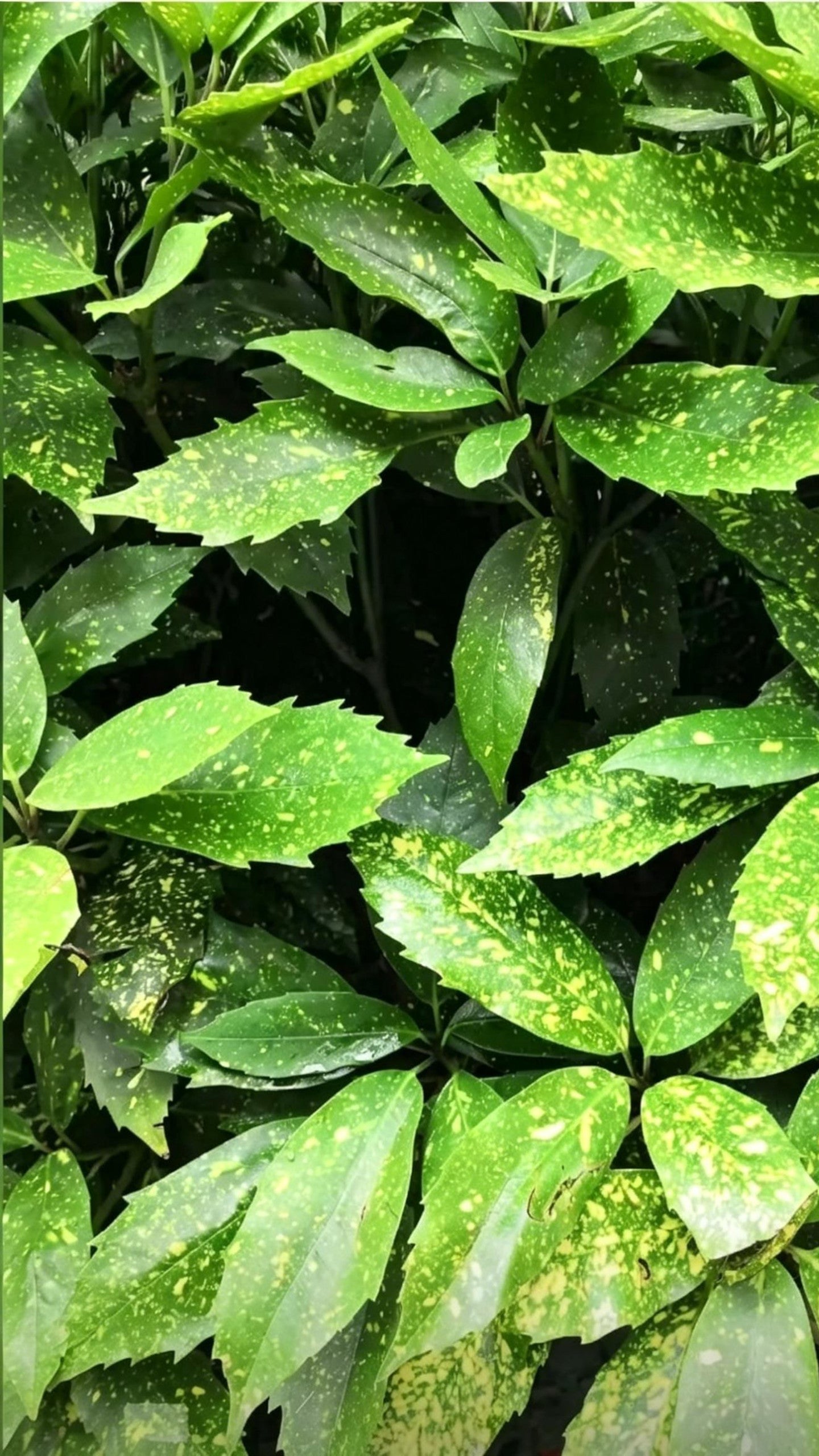
Scientific Name: Aucuba japonica Thunb. var. variegata D'Om-Bail. (A. japonica 'Variegata')
Common Names: Spotted Laurel, Yellow-spotted Laurel, Japanese Laurel, Gold Dust Plant
Classification: Garryaceae (Cornaceae) - Aucuba | Evergreen Shrub / Shade-tolerant Foliage Shrub & Groundcover
1. Characteristics
- Plant Form: Evergreen shrub, 1–2 (up to 3) m tall; thick green twigs; opposite, leathery, elliptic to obovate-elliptic leaves, 8–20 cm long. Dark green leaves with irregular golden-yellow spots ("Gold Dust"); leaf underside is light green or brownish; dioecious (female plants are mostly used in engineering).
- Flowers/Fruit: Male flowers in terminal panicles, female in short axillary racemes, small dark purplish-red (Mar–Apr); female plants produce bright red oval drupes, ~1 cm diameter, persisting through winter (Oct–Dec ripen), contrasting beautifully with green leaves.
- Seasonal Performance: Evergreen year-round. New light green leaves with yellow spots → mature dark green with gold dust → ornamental red berries in winter. An excellent evergreen groundcover and shade shrub.
2. Ecological Habits
- Light: Highly shade-tolerant; typical sciophilous plant, ideal for northern sides of buildings, underpasses, or forest understories. Direct strong sunlight (especially western exposure) can lead to leaf tip burn and fading of yellow spots.
- Soil: Prefers loose, fertile, humus-rich, well-drained slightly acidic sandy loam (pH 5.5–6.5); avoid alkaline soil (causes yellowing) and waterlogging.
- Temperature/Humidity: Optimal 15–25°C; tolerates short-term -5 to -8°C (common in open ground in Central/East China; container cultivation or root protection recommended in North China). Likes humid air.
- Resistance: Pruning-resistant, strong budding power, pollution-resistant (dust trapping, absorbing harmful gases). Very few pests/diseases (occasional anthracnose or scale insects).
3. Landscape Applications
- Understory Groundcover: Planted under tall trees or at forest edges to fill lower layers with evergreen cover. One of the most typical shade-tolerant groundcover shrubs.
- Building North Side / Shady Foundation: Mass planting around foundations, wall interiors, and above underground garage entrances.
- Overpass / Tunnel Greening: Normal growth and color maintenance in low-light areas.
- Themed Gardens: Pair with Fatsia japonica, broad-leaved Ophiopogon, and Hosta for shade garden compositions.
- Container Display: Potted display in large shady spaces like hotel lobbies and office atriums.
4. Quality Indicators (Example - Container Seedlings)
| Item | Specifications |
|---|---|
| Age | 1–2 year old cuttings (mostly female for berries) |
| Height (H) | 25–40 cm / 40–60 cm (as per design) |
| Crown (P) | ≥ 20–30 cm, low branching, ≥ 3–5 branches, dense base |
| Container | Cup/Pot diameter 10–12 cm / 12–15 cm, acidic substrate, non-circling roots |
| Quality | Clear gold dust spots, dark green leaves, disease/pest free |
5. Planting & Maintenance
- Planting Season: Spring and Autumn are best; container seedlings can be planted year-round (avoid peak summer sun).
- Pruning: Light pruning in the growing season for height/width control; moderate heading back after flowering or in early spring; heavy pruning every 3–4 years to rejuvenate old plants.
- Water & Fertilizer: Deep watering at planting; top-dress with organic or acidic compound fertilizers in the growing season; use iron supplements in alkaline areas to prevent yellowing.
- Pest Control: Rare; ensure ventilation and drainage to prevent root rot.