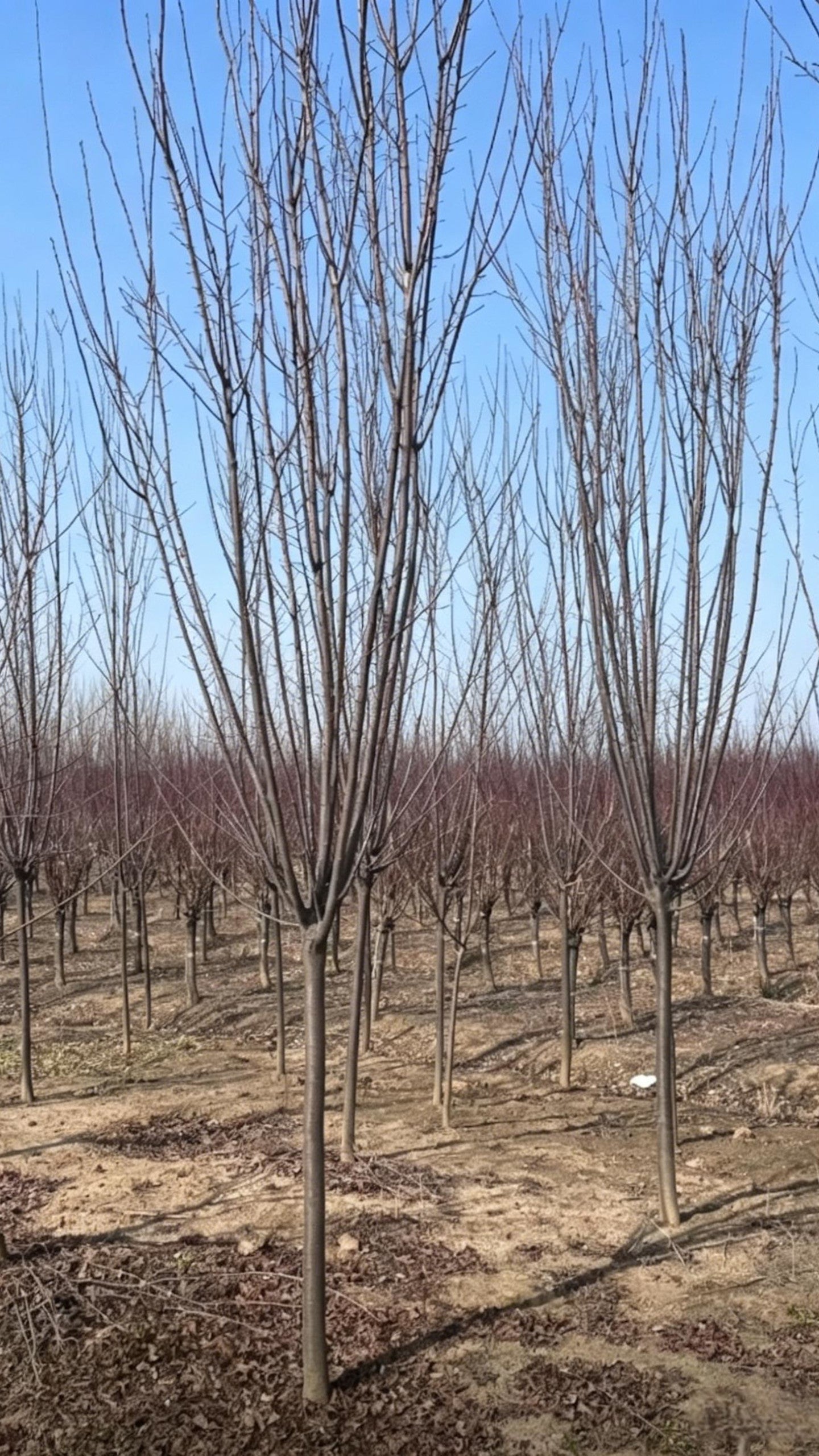
Scientific Name: Prunus cerasifera Ehrh. f. atropurpurea (Jacq.) Rehd. (Purple-leaf variant of Cherry Plum)
Aliases: Red-leaf Plum, Purple Cherry
Classification: Rosaceae, Prunus - Deciduous small tree / Colorful foliage tree
1. Varietal Characteristics
-
Plant Morphology: Deciduous small tree, 4–8 m tall; crown umbrella-shaped or near-round, bark grayish-brown with shallow longitudinal cracks; twigs purple-red or purple-gray-brown; leaves alternate, ovate or elliptical-ovate, 4–8 cm long, all leaves are purple-red or purple-red-brown all year round (brightest in spring, slightly darker in summer and autumn), which is the core identification feature.
-
Flower Performance: Flowers solitary or in pairs, short pedicels (1–2 cm), petals white or light pink, about 2.5–3 cm in diameter, blooming period March–April (flowers open before or with leaves); drupe near-spherical, 1–1.5 cm in diameter, dark red or purple-black when ripe, slightly acidic and edible but with average taste.
-
Seasonal Performance: Purple-red new leaves + light pink flowers in spring → deep purple-red leaves providing shade in summer → leaf color slightly fades to purple-brown in autumn → view branch and stem posture in winter; it is a year-round colorful foliage tree.
2. Ecological Habits
-
Light: Sun-loving species, prefers full sun; the more abundant the light, the more purple-red and vibrant the leaf color; too much shade results in leaves turning green and branches growing excessively.
-
Soil: Thrives in loose, fertile, and well-drained slightly acidic to neutral sandy loam; avoid low-lying waterlogged areas, avoid heavy saline-alkaline soil.
-
Resistance: Relatively cold-hardy (can withstand temperatures around -15°C, cultivated in open ground in southern North China and further south), drought-tolerant, pruning-resistant, strong sprouting ability; few pests and diseases (occasionally aphids, spider mites, leaf hole disease).
3. Engineering Application Scenarios
-
Solitary Planting for Focus: Solitary planting in open lawn areas or by the water creates a strong contrast between purple-red leaves and blue sky/green water.
-
Row Planting/Street Trees: Planted as colorful street trees on garden paths or main roads in residential areas, alternated with evergreen trees (such as Cinnamomum camphora, Ligustrum lucidum).
-
Group Planting/Hedges: Planted in groups as background color blocks, or pruned as high color-leaf hedges (height 1.2–1.8 m).
4. Sapling Quality Indicators
|
Project Name |
Specification Parameters |
|---|---|
|
DBH / Meter Diameter |
Φ 3cm / Φ 5 cm / Φ 6 cm (Graded by design) |
|
Height (H) |
200–350 cm (Matching DBH) |
|
Crown Width (P) |
≥ 150–250 cm, uniform and full crown, no lopsidedness |
|
Branching Point |
Uniform and neat (usually 80–120 cm or as per design), 3–5 main branches in layers |
|
Earth Ball Specification |
8–10 times the DBH, complete root system |
|
Quality Requirements |
Good healing of the graft union (rootstock mostly seedling plum or peach), normal purple-red leaf color, no serious reversion to green, no quarantine pests or diseases |
5. Planting and Maintenance Points
-
Planting Period: Best from after autumn leaf fall to before early spring budding; container seedlings can extend the construction period (avoiding intense summer heat).
-
Water and Fertilizer: Thoroughly water after planting; apply decomposed organic fertilizer or compound fertilizer 2–3 times a year during the growing season, and extra phosphorus and potassium fertilizer before flowering; avoid root rot from waterlogging.
-
Pruning: Thin out dense, crossing, or inward-growing branches during the winter dormant period, maintaining a natural umbrella-shaped crown; light pruning is sufficient, avoid heavy pruning.
-
Pest and Disease Control: Focus on controlling aphids, spider mites, and leaf hole disease; timely remove diseased leaves and ensure good ventilation.