-
Scientific Name: Loropetalum chinense var. rubrum (Red Fringe Flower pruned topiary specimen)
Aliases: Red Loropetalum Globe, Loropetalum Rubrum Ball, Red Fringe Flower Topiary
Classification: Hamamelidaceae family, Loropetalum genus · Evergreen Shrub → Pruned Topiary Globes
1. Variety Characteristics
-
Original Form: Evergreen shrub with stellate-pubescent branchlets. Leaves are alternate, ovate or elliptical. New foliage is glossy purple-red to dark purple-red; mature leaves are dark purple-red or tinted with green. Flowers are bisexual with 4 linear petals, deep rose or dark red (Blooms Mar–Apr, with some varieties re-blooming in autumn).
-
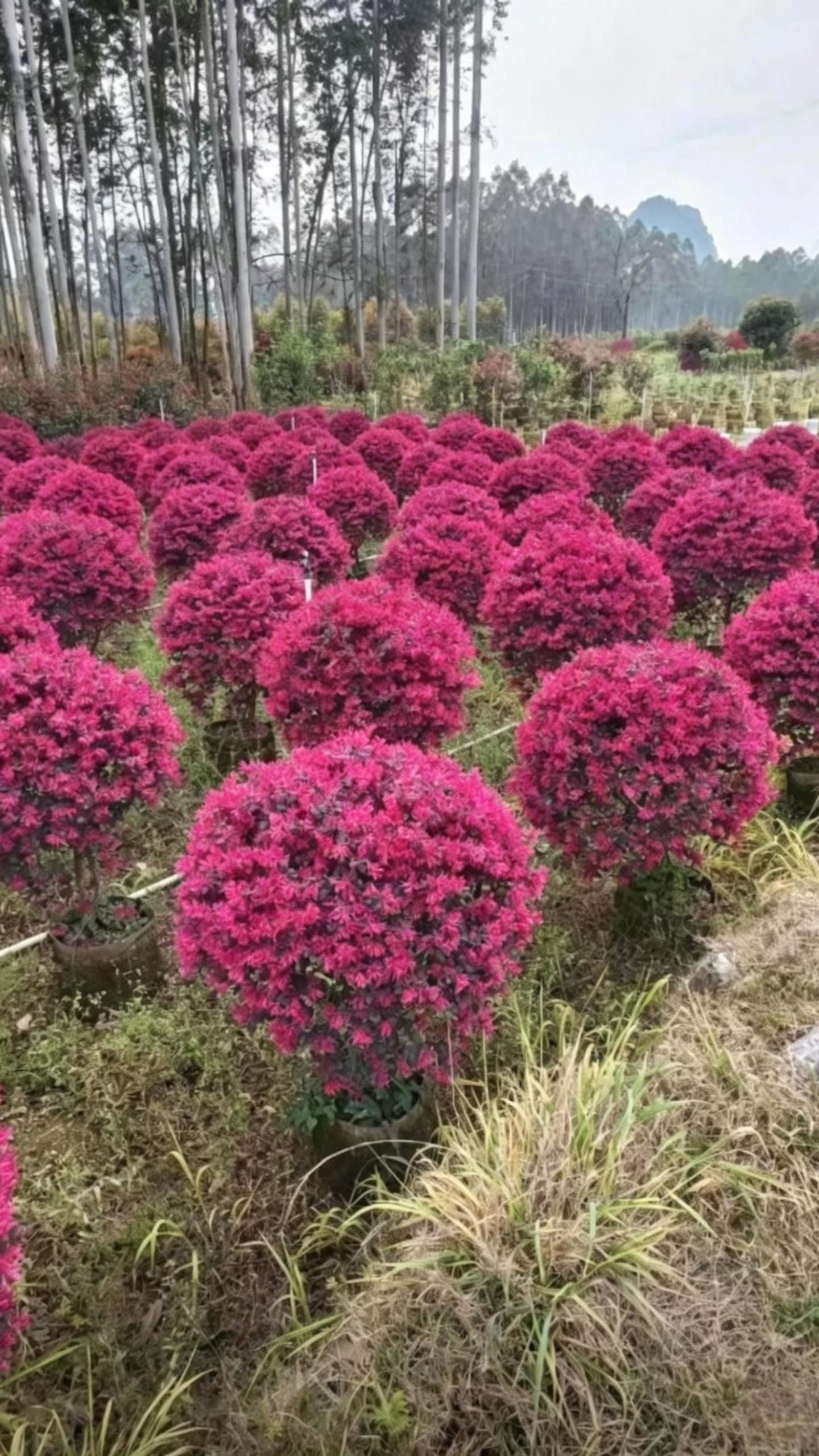
Topiary Description: This product consists of Loropetalum specimens cultivated over several years and shaped through multiple rounds of pruning into spherical or semi-spherical forms. The foliage remains purple-red year-round, with dense branching and full globes, serving as an extremely stable red color block in landscaping.
-
Seasonal Appearance: Purple-red throughout the four seasons (slightly darker in summer heat, reddest in spring). The spring bloom creates a stunning "full globe of red flowers and red leaves" effect.
2. Ecological Habits
-
Light: Prefers sun, tolerates partial shade; foliage is most vibrant in full sunlight. Excessive shade leads to greening of leaves and fewer flowers.
-
Soil: Prefers slightly acidic, loose, and fertile sandy loam. Avoid waterlogging; does not tolerate alkaline soil.
-
Resistance: Relatively cold-resistant (tolerates short-term temperatures down to -10°C). Drought-resistant, highly tolerant of heavy pruning, strong budding ability, and strong pollution resistance.
3. Engineering Application Scenarios
-
Color Block Composition: Acts as a "red skeleton globe" in lawns, color bands, or flower borders. Pairs well with Euonymus japonicus 'Aureomarginatus' or Ligustrum sinense globes to create red-yellow-green landscapes.
-
Formal Planting: Symmetrically planted at road intersections, both sides of steps, or in front of feature walls as a screen.
-
Potted/Container Greenery: Its compact and exquisite shape is often used for mobile flower box combinations in commercial squares.
4. Quality Indicators (Example — Engineering Topiary Globe)
Project Item Specification Parameters Crown Width (P) 60–80 cm / 80–100 cm / 100–120 cm / 150 cm+ Height (H) Usually H ≈ P or H = P + 10 cm (from base to top of globe) Quality Requirements Well-rounded sphere, no hollows, purple-red leaf coverage >90%, no dead branches, well-developed root system 5. Planting and Maintenance Key Points
-
Planting Season: Best before spring budding or after leaf fall; container plants can be installed year-round (avoid extreme heat or cold).
-
Pruning: To maintain the spherical shape, light pruning should be done 2–3 times during the growing season (May–Sept). If an old tree loses its shape, heavy pruning can encourage new growth.
-
Fertilization: Prefers fertilizer; apply compound fertilizer 2–3 times per year. Increase nitrogen in spring to promote red foliage growth.
-