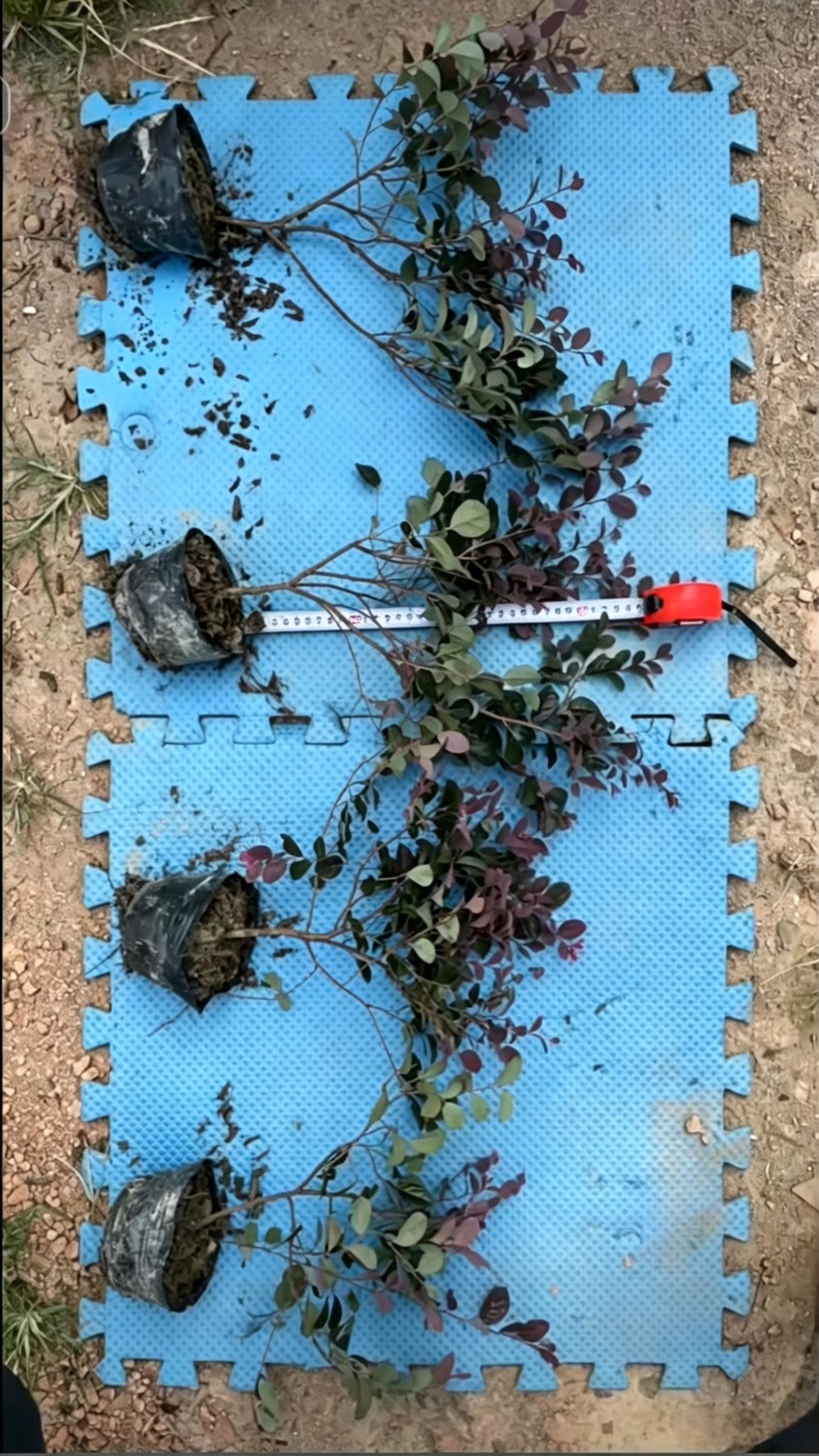
Scientific Name: Loropetalum chinense var. rubrum
Common Names: Red Fringe Flower, Loropetalum, Chinese Fringe Flower
Classification: Hamamelidaceae, Loropetalum genus · Evergreen shrub / Color block and flowering hedge plant
Common Cultivation Types: 'Rubrum' (lighter leaves), 'Ever Red' (new leaves deep purple on both sides, mainstream for engineering)
1. Variety Characteristics
-
Plant Morphology: Evergreen shrub, 1–2 (up to 3) m high; branchlets covered with stellate hairs, leaves alternate, ovate or elliptic, 2–5 cm long, new leaves purple-red to dark purple-red and glossy, mature leaves dark purple-red or with a green tint; flowers bisexual, petals 4, linear, deep rose-red or dark red, flowering in March–April and September–October, can bloom multiple times in warm regions; fruit is a woody capsule.
-
Seasonal Performance: Purple-red/dark green year-round; new leaves in spring and autumn are the most vibrant deep purple-red, adorned with deep red flower spikes during bloom; winter leaves turn slightly brownish but remain ornamental.
2. Ecological Habits
-
Light: Prefers light, also tolerates semi-shade; sufficient light makes leaves vibrant purple-red and increases flower volume, excessive shade makes leaves greener and branches sparser.
-
Soil: Prefers loose, fertile, well-drained slightly acidic sandy loam (pH 5.5–6.5); avoid alkaline soil and waterlogging.
-
Resistance: Heat-tolerant and relatively drought-tolerant, can withstand short-term low temperatures of -5 to -8°C (mostly open field in Central, East, and South China; protection needed in North China); tolerates pruning with strong sprouting.
3. Engineering Application Scenarios
-
Patterned Color Blocks: Planted in patches with Golden Boxwood, Boxwood, and Photinia to form classic purple-gold-green patterns, common in road dividers, squares, and park green spaces.
-
Flowering Hedges/Dividers: Densely planted as medium-to-low evergreen flowering hedges, combining ornamental and boundary-separating functions.
-
Foundation Planting: Around building perimeters and roadside green belts to fill base colors and cover building bases.
-
Group Plantings: Combined with perennial flowers and groundcover plants to form lower-layer colorful foliage groups.
4. Sapling Quality Indicators
|
Project Name |
Specifications |
|---|---|
|
Sapling Age |
1–2 year old cutting seedlings |
|
Height (H) |
20–30 cm / 30–40 cm / 40–50 cm (as per design) |
|
Crown Width (P) |
≥15–25 cm, low branching, branch count ≥3–5, branches lignified |
|
Container Requirements |
Nutritional cup/pot diameter 8–12 cm, roots not tangled, original soil intact |
|
Quality Requirements |
Variety is 'Ever Red' (new leaves deep purple on both sides), free of anthracnose and scale insects, normal leaf color, no serious reversion to green |
|
Large Field-grown Saplings (if any) |
H 50–80 cm, P ≥30–40 cm, root ball properly wrapped |
5. Planting and Maintenance Key Points
-
Planting Season: Best before or after sprouting in spring and autumn; container seedlings can be constructed year-round (avoid peak summer heat).
-
Pruning: Prune 1–2 times during the growth season to control height and width; light pruning after flowering to promote branching; heavy heading back can be done in early spring.
-
Water and Fertilizer: Thoroughly water after planting; apply decomposed organic fertilizer or acidic composite fertilizer during growth season; avoid excessive nitrogen fertilizer which causes leaves to turn green; avoid root rot from waterlogging.
-
Pests and Diseases: Monitor for anthracnose, sooty mold, scale insects, and aphids; maintain ventilation and apply medication promptly.