-
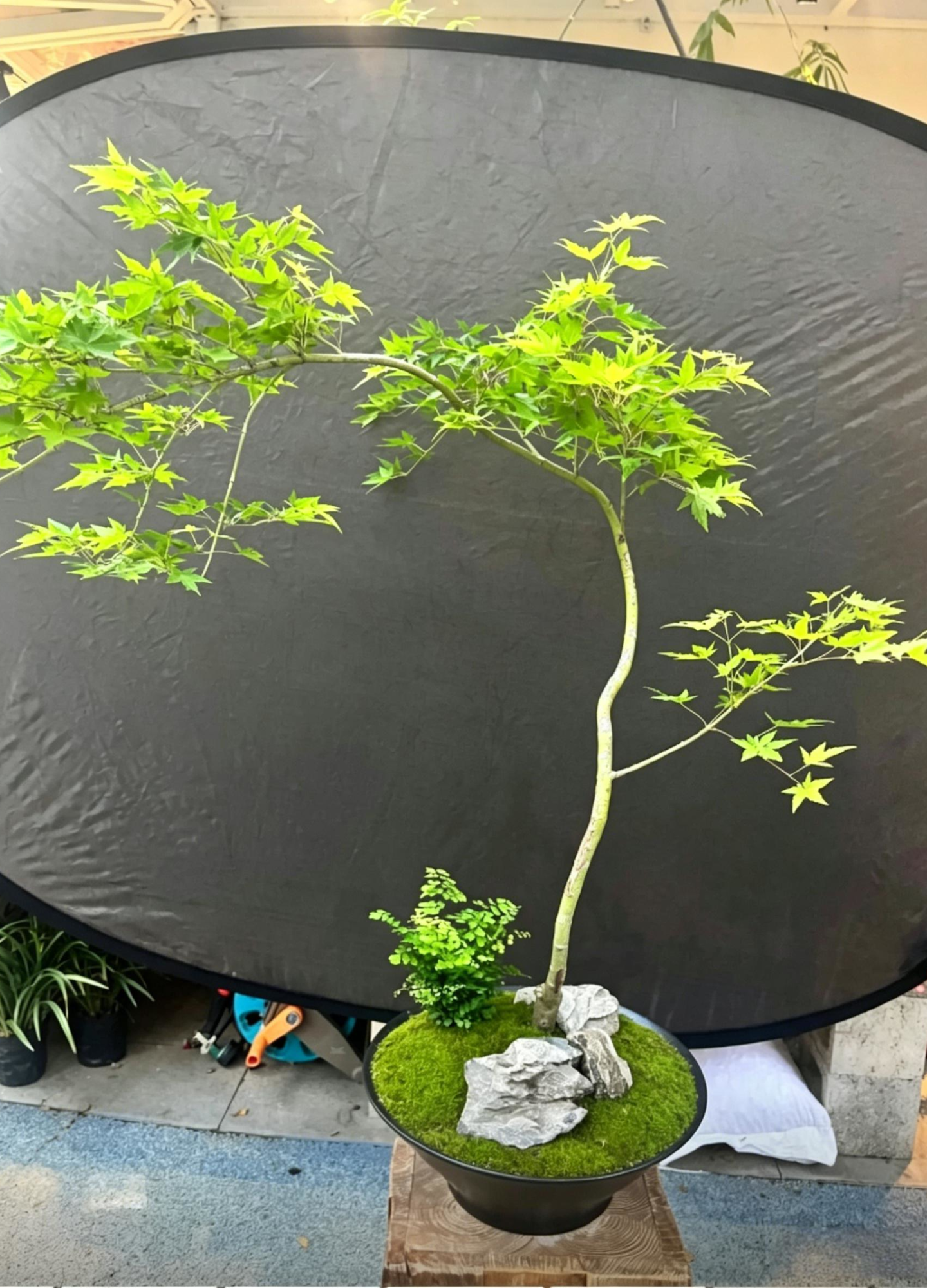
Scientific Name: Acer palmatum Thunb. (Original species / Green Maple)
Aliases: Japanese Maple, Smooth Japanese Maple, Green Maple
Seedling Classification: Sapindaceae, Acer - Deciduous small tree / Ornamental foliage tree
1. Variety Characteristics
-
Plant Morphology: Deciduous small tree with an elegant, umbrella-shaped crown; branchlets are fine and hairless, green or purple; leaves are palmately 7–9 deep lobes, lobes are oblong-lanceolate with doubly serrated edges. Leaf color is bright emerald green in spring and summer, turning to vivid orange-red or crimson in autumn.
-
Flowers and Fruit: Purple flowers in terminal cymes (April–May); samaras are purple-red when young, turning yellowish-brown when mature (September–October).
-
Seasonal Performance: Delicate tender green in spring → thick emerald shade in summer → red leaves covering branches in autumn → ancient wood silhouette in winter; it is a world-renowned autumn foliage tree species.
2. Ecological Habits
-
Light: Prefers light shade, highly shade-tolerant; avoid intense direct sunlight (western exposure), as leaves easily scorch under strong light.
-
Soil: Prefers loose, fertile, well-drained acidic to neutral humus soil; avoid waterlogging and saline-alkali soil.
-
Resistance: Relatively cold-hardy (can overwinter in open fields in the Yellow River basin and further south); slow growth rate, relatively few pests and diseases.
3. Engineering Application Scenarios
-
Courtyard Landscape: A core plant for Chinese and Japanese style courtyards, often paired with ornamental stones, moss, and cascading water to create a Zen atmosphere.
-
Forest Edge Planting: Used as a skeleton tree species for forest edge landscapes, combined with Red Maple, Dissectum Maple, and evergreen trees to enrich the skyline.
-
Bonsai Creation: Vigorous stems that are easy to shape make it an ideal material for high-end bonsai creation.
4. Seedling Quality Indicators (Example - Engineering Specimen/Container Seedling)
Item Name Specification Parameters Ground Diameter/Caliper (d/Φ) d 3–5 cm / 5–8 cm / 8–10 cm and above Height (H) 1.5–2.5 m / 3–4 m and above Crown Width (P) 1.0–1.5 m / 2.0–3.0 m and above Quality Requirements Upright trunk or natural artistic shape, full and balanced crown, no obvious pests or diseases, intact root ball (field-grown) or stable root system (container-grown) 5. Planting and Maintenance Key Points
-
Planting Period: Best from leaf fall to before budding (November to March of the following year); container seedlings can be planted year-round.
-
Pruning: Prune diseased, dry, and overcrowded branches during the dormant period annually; focus on maintaining a natural and elegant posture, avoid aggressive topping.
-
Water and Fertilizer: Prefers moist conditions; replenish water timely during dry periods; apply organic fertilizer in spring, and control water and nitrogen after autumn to facilitate the transition to red leaf color.
-