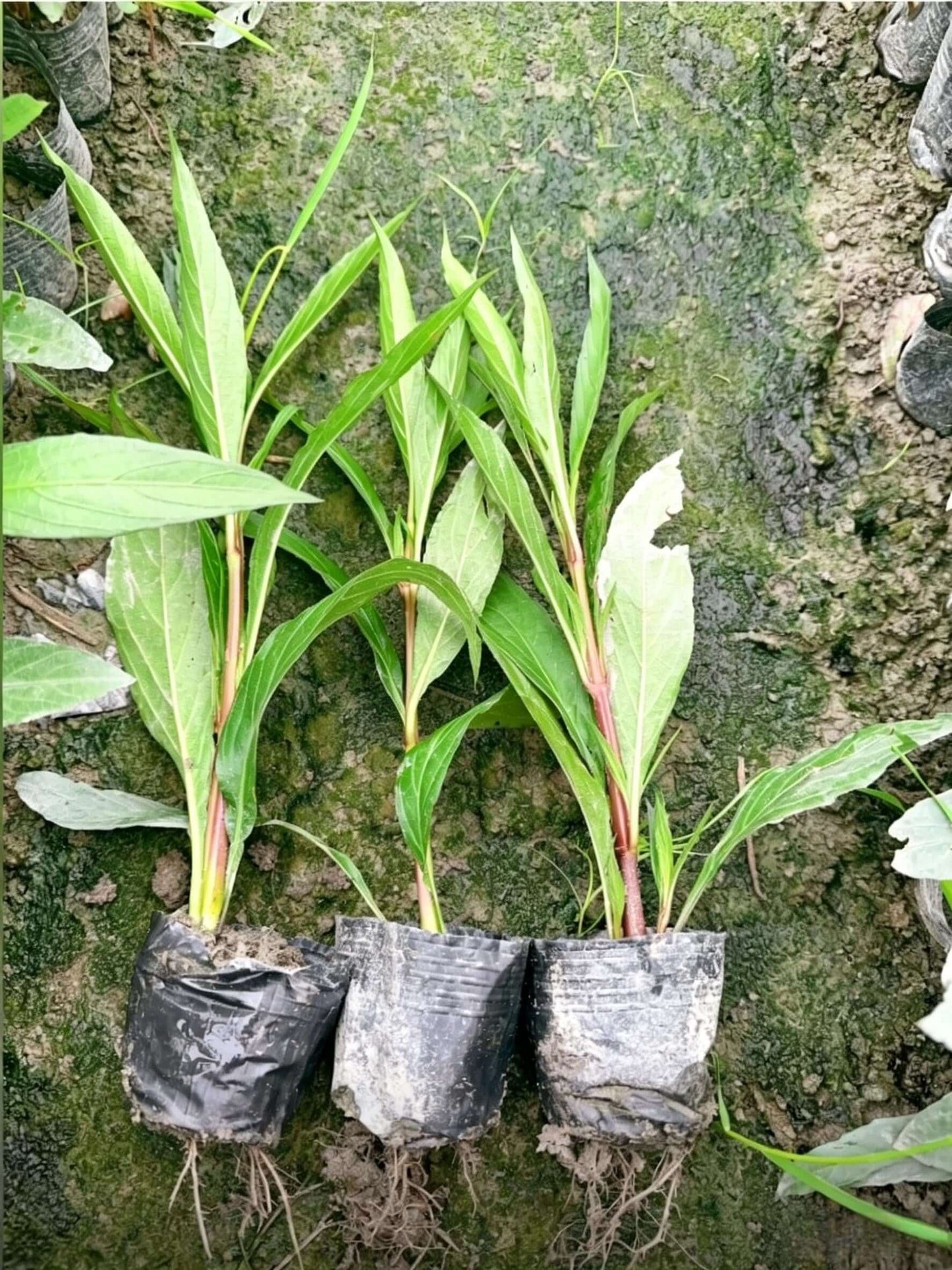
Scientific Name: Ruellia simplex C. Wright (formerly Ruellia brittoniana)
Common Names: Mexican Petunia, Blue Shade, Britton's Wild Petunia
Classification: Acanthaceae, Ruellia – Perennial Herb / Flower Border and Groundcover Ornamental
1. Variety Characteristics
-
Plant Morphology: Thick rhizomes underground; stems clustered, upright or slightly leaning, 30–80 cm high (up to 100 cm); stems four-angled, short-haired; leaves opposite, linear-lanceolate to elliptical-lanceolate, 8–20 cm long, entire margin, upper surface dark green and glossy, lower surface slightly lighter.
-
Floral Performance: Flowers solitary or in pairs/trios from upper leaf axils; corolla funnel-shaped, 5-lobed, 4–6 cm diameter; typical flower color is blue-purple (pink and white cultivars also exist); individual flowers open in the morning and fade by evening, but the inflorescence blooms continuously, resulting in a very long group flowering period; natural flowering period from May to October (can bloom from spring to autumn in South China).
-
Seasonal Interest: Sprouts in spring → continuous flowering in summer and autumn → above-ground parts wither after frost (in Central China and north), with underground rhizomes overwintering and re-sprouting the following spring; often semi-evergreen in South China.
2. Ecological Habits
-
Light: Light-loving, blooms best in full sun; also tolerates partial shade (still blooms in half-day sun but with fewer flowers); too much shade causes leggy growth and lodging.
-
Soil: Highly adaptable to soil types, prefers loose, fertile, well-drained sandy loam or clay loam; tolerates light salinity and short-term drought, avoids long-term waterlogging.
-
Temperature: Optimum growth temperature 20–30°C; underground rhizomes can withstand -5 to -8°C (if soil doesn't freeze) to overwinter; cultivated in open ground in Central and East China (withers in winter, sprouts in spring); in North China, soil covering or annual replanting/indoor potting is recommended.
-
Resistance: Heat-tolerant, drought-tolerant, tolerates extensive management, very few pests and diseases, suitable for low-maintenance landscapes.
3. Engineering Application Scenarios
-
Flower Border Middle Ground: Planted in blocks in the middle or back of perennial flower borders, paired with Salvia, Hylotelephium erythrostictum, and Coreopsis to create vertical lines with blue-purple flower spikes.
-
Roadside/Slope Groundcover: Densely planted in road medians, along garden paths, or on gentle slopes for soil stabilization and summer-autumn flowering.
-
Waterside Edges: Planted in moist areas (not submerged) of ponds or artificial lake banks as a transition to wetland plants.
-
Themed Gardens / Resorts: Mass planting for tropical style or low-maintenance flower borders, creating a natural wild interest.
4. Nursery Stock Quality Indicators
|
Item Name |
Specifications |
|---|---|
|
Age |
Current year or 1-year-old division/cutting seedlings |
|
Height (H) |
15–25 cm (at delivery) / Mature 30–50 cm |
|
Clump Requirements |
Each clump ≥ 2–3 buds or 3–5 stems, well-developed roots filling the container |
|
Container Requirements |
Nutritional pot diameter 9–12 cm / 1–2 gallon pot, intact original soil |
|
Quality Requirements |
Leaves normal, no severe leaf spot, variety specified as blue-purple (others as noted) |
5. Planting and Maintenance Points
-
Planting Season: After the last frost when temperatures are stable ≥ 15°C (usually April–May in Central China); container seedlings can be planted later.
-
Pruning: Remove spent flower stalks to promote continued blooming; in late autumn after frost, cut back withered above-ground parts leaving 5–10 cm, cover roots with thin soil or hay (in cold regions).
-
Water and Fertilizer: Thorough initial watering; apply compound fertilizer or decomposed liquid fertilizer monthly during peak growth, and more P and K before flowering; drought-tolerant but moist soil during growth results in more flowers.
-
Renewal: Replant by division every 2–3 years in early spring, removing aged rhizomes.
-
Pests and Diseases: Very few, occasionally leaf spot or aphids; maintain good ventilation and treat promptly.