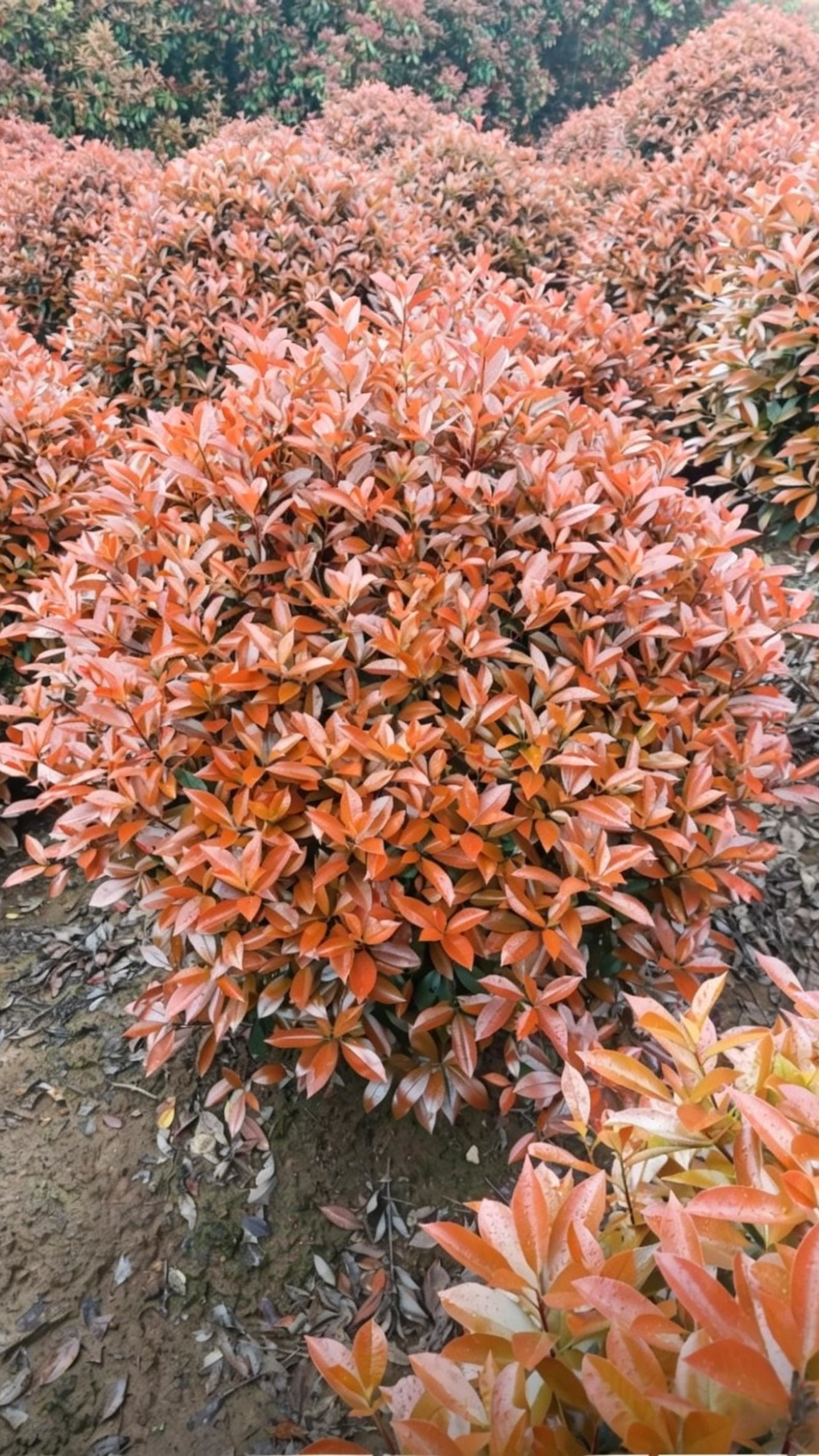
Scientific Name: Photinia × fraseri Dress (Red Robin Photinia Topiary Sapling)
Aliases: Red Robin Topiary Ball, Flame Photinia Ball
Classification: Rosaceae, Photinia • Evergreen Shrub → Pruned Topiary Ball
1. Variety Characteristics
-
Morphology: Evergreen shrub with grayish-brown hairless twigs. Leaves are opposite, leathery, obovate or broadly elliptical with fine serrated edges. New shoots and young leaves are a brilliant flame red, turning dark glossy green when mature.
-
Topiary Description: This product is a regular spherical topiary sapling formed through multiple pinching and heavy pruning of Photinia. It features dense branching and a stable structure, making it a highly striking red evergreen focal point in landscapes.
-
Seasonal Performance: Evergreen throughout the year. In spring, early summer, and autumn, the emergence of new shoots creates a spectacular "entire ball red" effect. In winter, the leaves darken slightly but remain deep red or dark green, maintaining high landscape appeal.
2. Ecological Habits
-
Light: A sun-loving species that prefers full sun. With sufficient light, new shoots are more vibrant and stay red longer. In shaded areas, leaves tend to turn green and branches become sparse.
-
Soil: Not demanding regarding soil. It is drought-tolerant and poor-soil tolerant, growing best in loose, fertile, well-drained slightly acidic to neutral sandy loam. Avoid long-term waterlogging.
-
Resistance: Relatively cold-hardy (tolerates temperatures down to approx. -15°C; suitable for open-field cultivation south of North China). Good drought and pruning tolerance; moderate pollution resistance; few pests and diseases.
3. Landscape Application Scenarios
-
Specimen Planting: Single balls placed on lawns, squares, or by entrance water features provide a strong red-green contrast and a prominent visual focus.
-
Symmetrical Row Planting: Placed symmetrically at main residential entrances, sales office steps, or along walking axes to create a sense of formality and ceremony.
-
Mixed Composition: Combined with Golden Privet balls (Golden Yellow) and Boxwood balls (Dark Green) to form a tri-color red, yellow, and green landscape.
4. Quality Indicators (Example - Professional Topiary Ball)
| Item Name | Specifications |
|---|---|
| Crown Width (P) | 60–80 cm / 80–100 cm / 100–120 cm / 150 cm+ |
| Height (H) | Usually H ≈ P or H = P + 10 cm |
| Quality Requirements | Well-rounded spherical shape, no hollows, high new leaf coverage, no dead branches, well-developed root system, free of pests and diseases |
5. Planting and Maintenance Points
-
Planting Period: Best before spring budding or in autumn; container seedlings can be planted year-round.
-
Pruning: Highly tolerant of pruning. Topiary balls require pruning 3–4 times annually to promote new shoots and maintain the red leaf effect; fertilize immediately after pruning.
-
Water and Fertilizer: High nutrient demand during the growing season. Use nitrogen fertilizer in spring and compound fertilizer in autumn to enhance cold resistance.