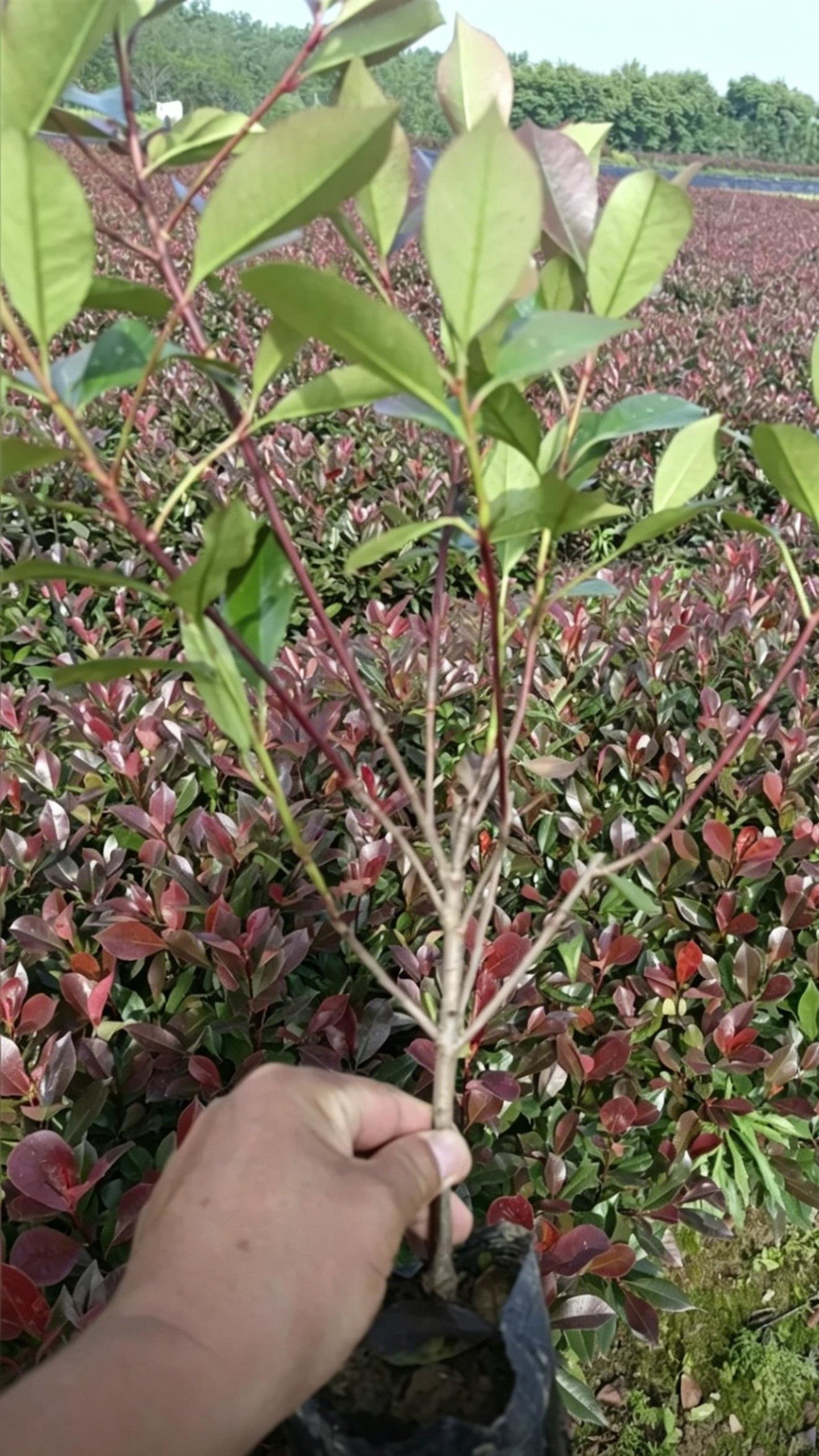
Red Robin Photinia (Photinia Shrub)
Red Robin Photinia (Photinia Shrub)
Scientific Name: Photinia × fraseri 'Red Robin' (Pruned Topiary Variety)
Common Names: Photinia Ball, Red Robin Ball, Flame Photinia
Classification: Rosaceae, Photinia genus · Evergreen shrub / Small tree → Pruned topiary balls
1. Variety Characteristics
-
Original Species Morphology: Evergreen small tree or shrub, can reach 4–6 m high; leaves leathery, oblong-obovate, 5–15 cm long, new leaves and tender shoots are bright red or carmine, mature leaves turn dark green and glossy; white compound corymbs bloom in late spring/early summer, followed by red globose pome fruits in autumn.
-
Topiary Description: This product is an evergreen sphere or hemisphere formed from Photinia cuttings through multiple pinching and pruning; branches are dense, leaves are small and compact, with strong sprouting ability and tolerance to repeated pruning to maintain shape.
-
Seasonal Performance: Evergreen year-round; new leaves are fiery red and dazzling in spring and autumn, deep green and shiny in summer, and deep green with a hint of brownish-red in winter—new leaves are the most prominent ornamental highlight.
2. Ecological Habits
-
Light: Prefers light, also tolerates semi-shade; new leaves are more vibrant red under strong light, while excessive shade leads to greening and sparser branches.
-
Soil: Not strict about soil; thrives in loose, fertile, well-drained slightly acidic to neutral sandy loam; avoid waterlogged lowlands.
-
Resistance: Relatively cold-tolerant (withstands temperatures around -15°C, open field south of North China), drought-tolerant, poor-soil tolerant, slightly salt-alkali tolerant, medium pollution resistance, and few pests and diseases.
3. Engineering Application Scenarios
-
Solitary Planting for Accents: Single balls placed independently on lawns, squares, or near entrance water features; strong red-green contrast creates a clear visual focus.
-
Paired or Row Planting: Symmetrically planted in rows at main entrances, sides of sales center steps, or along walking axes to convey a sense of solemn ceremony.
-
Color Combinations: Planted in groups with Golden Boxwood balls, Boxwood balls, and Ilex cornuta 'Aurea' balls to form classic red-yellow-green layered patterns.
-
Foundation Planting and Dividers: Around building perimeters and roadside green belts as low dividers or to cover bases.
4. Sapling Quality Indicators (Example)
|
Project Name |
Specifications |
|---|---|
|
Crown Width (P) |
P50 / P60 / P80 / P100 / P120 / P150 / P180 cm (graded by design) |
|
Height (H) |
≈ 0.8–1.0 times the crown width, round and full crown shape |
|
Branching Condition |
Cutting seedlings aged 3 years or more, multi-branched with full interior, no obvious "bald spots" or "lopsided crowns" |
|
Root Ball Specs |
For P < 80 cm, root ball Ø20–25 cm; |
|
Quality Requirements |
Pruned to shape (mirror ball / premium ball), free of scale insects and anthracnose, vibrant red new leaves, dark green old leaves |
5. Planting and Maintenance Key Points
-
Planting Season: Best in late autumn or early spring before sprouting; container seedlings can be planted year-round (avoid peak summer heat).
-
Pruning: Lightly prune every 40–60 days during growth season to maintain shape, with heavy annual pruning in early spring or after flowering; single pruning volume ≤ 1/3, prune to encourage new rounds of red leaves.
-
Water and Fertilizer: Thoroughly water after planting; apply nitrogen-phosphorus-potassium composite fertilizer during growth season, increase phosphorus and potassium in spring and autumn for vibrant red leaves, avoid excessive nitrogen which causes reversion to green.
-
Pests and Diseases: Occasional anthracnose, scale insects, and aphids; maintain ventilation and apply targeted prevention.