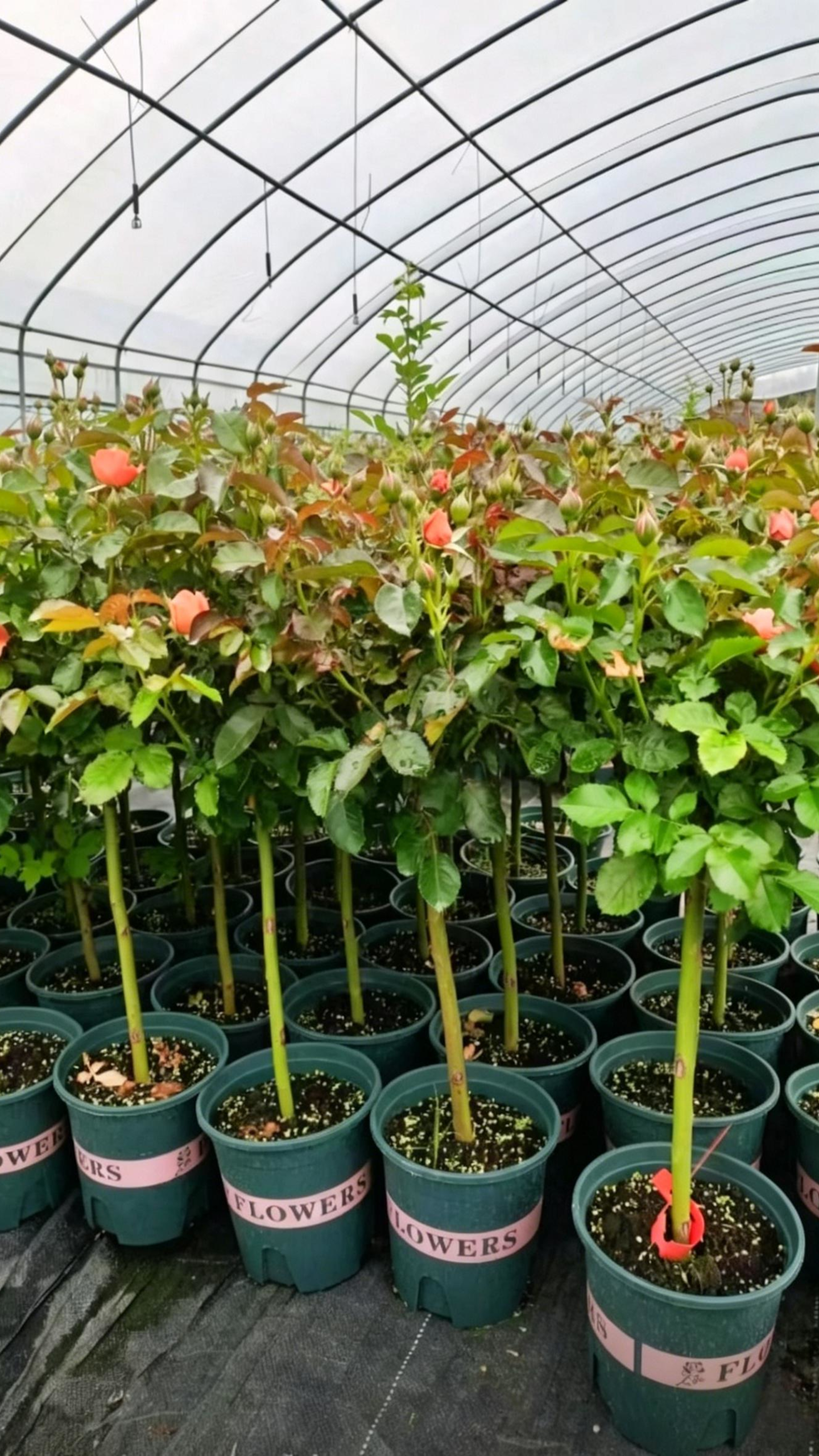
Scientific Name: Rosa chinensis Jacq. / Rosa hybrida Hort. (Modern Rose)
Aliases: Monthly Red, Queen of Flowers
Seedling Classification: Evergreen or semi-evergreen shrub / Flowering ornamental seedling
Common Engineering Types: Floribunda Rose (Red Hat/Yellow Hat Rose), Hybrid Tea Rose (Large-flowered), Groundcover Rose, Climbing Rose, Tree Rose (Lollipop Rose)
1. Varietal Characteristics
-
Plant Morphology: Plant height varies from 0.3–2 m. Branchlets are cylindrical with hooked prickles. Odd-pinnate compound leaves, with 3–5 (rarely 7) leaflets, ovate to ovate-oblong, with sharply serrated margins, dark green and glossy on the surface.
-
Flower Performance: Flowers are solitary or clustered, 4–12 cm in diameter, single to double petals. Colors include red, pink, yellow, white, purple, orange, and bicolor; some varieties are fragrant. Natural blooming period is from April to November (can bloom in multiple seasons in warm regions).
-
Fruit: Rose hips are ovoid or pear-shaped, turning orange-red when mature.
2. Ecological Habits
-
Light: Sun-loving plant, prefers full sunlight and well-ventilated environments. Best flowering occurs with ≥ 6 hours of direct light daily; appropriate shading in strong summer light can prevent leaf scorch.
-
Temperature: Optimum temperature is 15–26°C. Growth slows and enters semi-dormancy below 5°C or above 30°C; most varieties can tolerate low temperatures of -10 to -15°C.
-
Soil: Prefers loose, fertile, organic-rich, and well-drained slightly acidic to neutral sandy loam (pH 6.0–7.0). Avoids waterlogging and saline-alkali soil.
-
Resistance: Relatively drought-tolerant and cold-hardy, with average pollution resistance. Common diseases are black spot and powdery mildew; attention to ventilation and regular prevention is required.
3. Engineering Application Scenarios
-
Flower Beds and Borders: Floribunda and Hybrid Tea roses are planted in mass in park flower beds, road median strips, and entrance plazas.
-
Flower Hedges/Green Hedges: Densely planted as flowering dividers or boundaries, combining ornamental and screening functions.
-
Vertical Greening: Climbing roses are used for decorating flower walls, arches, pergolas, and fences.
-
Groundcover: Low-growing groundcover roses are used for soil stabilization on slopes and large-scale flowering coverage.
-
Landscaping Focal Points: Tree roses (lollipop shape) are planted symmetrically at main entrances or along walkways as landscape focal points.
4. Seedling Quality Indicators (Example—Floribunda/Hybrid Tea Engineering Seedlings)
| Item Name | Specifications |
|---|---|
| Seedling Age | 1–2 year old cutting/grafted seedlings |
| Height (H) | 20–40 cm (container-grown) / 40–80 cm (field-grown large seedlings) |
| Crown Spread (P) | ≥ 15–30 cm, branches ≥ 3–5 |
| Container Requirements | Nursery cup/pot (diameter 10–15 cm), roots not pot-bound, original soil intact |
| Field-grown Large Seedlings | Graft union well-healed (for grafted), free of quarantine pests and diseases, normal leaf color |
| Tree Rose (if any) | Straight main trunk, smooth graft union healing, full canopy |
5. Planting and Maintenance Key Points
-
Planting Period: Late autumn after leaf fall or early spring before budding is best; container seedlings can be planted year-round (avoiding extreme heat).
-
Water and Fertilizer: Water thoroughly after planting (root-settling water); apply thin fertilizer frequently during the growing season (balanced N-P-K or high phosphorus/potassium for blooming). Replenish fertilizer timely after flowering. Keep soil moist but avoid waterlogging to prevent root rot.
-
Pruning: Heavy pruning during winter dormancy (leaving 2–4 healthy buds); deadhead promptly after flowering to encourage reblooming. Climbing roses are mainly pruned after flowering and in early winter.
-
Pest and Disease Control: Regularly spray preventatively from spring onwards for black spot, powdery mildew, aphids, and spider mites.