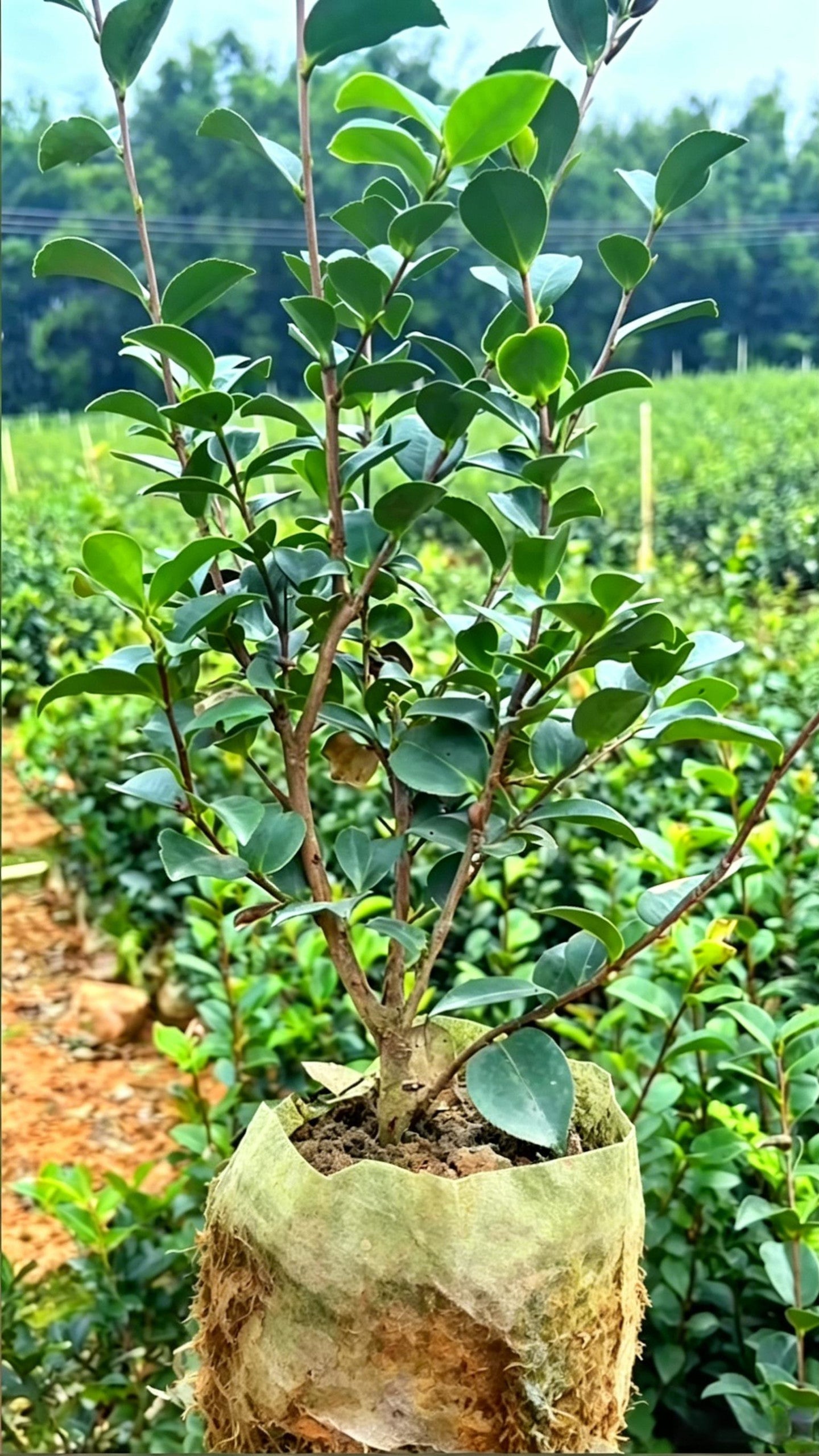
Scientific Name: Camellia sasanqua Thunb.
Common Names: Sasanqua Camellia, Winter-flowering Camellia
Classification: Theaceae, Camellia – Evergreen Shrub / Winter-Spring Flowering Shrub and Topiary Ball
1. Variety Characteristics
-
Plant Morphology: Evergreen shrub, usually 1–3 m high (occasionally up to 5 m); branchlets grey-brown and glabrous; leaves alternate, leathery, elliptical to ovate, 3–7 cm long, 1.5–3 cm wide, margins finely serrated, upper surface dark green and glossy; flowers solitary or paired in leaf axils, petals 5–7 (more in double varieties), colors mainly pink, deep red, white, occasionally variegated; flowering period October to March of the following year (peak in winter and spring); capsule near spherical, splitting when mature.
-
Difference from Camellia japonica: Sasanqua flowers are smaller, bloom earlier (autumn/winter → early spring), branches are more open and slightly drooping, growth is faster, and it is more tolerant of pruning. Camellia japonica flowers are larger, bloom mainly in early spring to spring, branches are upright, and growth is slower.
-
Seasonal Interest: Evergreen all year round; flowers in winter and spring (filling the gap during the dormant period of most woody plants); new leaves in autumn and winter are dense, green, and shiny.
2. Ecological Habits
-
Light: Prefers partial shade, avoids strong direct sunlight (especially summer afternoon sun which can cause leaf scorch); suitable for planting under thin forests, or on the east or north side of buildings; flower bud differentiation requires a moderate amount of scattered light.
-
Soil: Strictly prefers acidic soil (pH 5.0–6.5), loose, fertile, rich in humus, well-drained forest soil or mountain soil; avoids alkaline soil, heavy clay, and waterlogging.
-
Temperature: Optimum growth temperature 18–25°C; can withstand short-term low temperatures of -5 to -8°C (mainly cultivated in open ground in Central and East China; needs protection or indoor potting in North China); slightly more heat-tolerant than Camellia japonica.
-
Resistance: Tolerates pruning well, strong sprouting ability; few pests and diseases, occasionally scale insects, sooty mold, or anthracnose.
3. Engineering Application Scenarios
-
Entrance/Forecourt Nodes: High-quality plants planted as specimens or in pairs on both sides of entrance steps or beside hallways, providing elegant flowers in winter and spring.
-
Forest Margins/Understory Flower Borders: Combined with Photinia x fraseri, Ligustrum japonicum 'Howardii', and Nandina domestica under trees or in the middle of flower borders to fill the winter flowering gap.
-
Color Combinations: Paired with Loropetalum chinense balls and Euonymus japonicus balls to create purple-red, golden-yellow, and dark green layers, with Sasanqua providing winter flowers.
-
Topiary Balls/Hedges: Pruned into Sasanqua balls, or densely planted as low to medium evergreen hedges (60–120 cm height).
-
Container Display: Grown in thickened beauty bags or ceramic pots, used for symmetrical display at hotel lobby entrances or sales center terraces.
4. Nursery Stock Quality Indicators
① Engineering Container Seedlings (for Color Blocks/Hedges)
|
Item Name |
Specifications |
|---|---|
|
Age |
2–3 year old cutting seedlings |
|
Height (H) |
30–50 cm / 50–80 cm (by design) |
|
Crown Width (P) |
≥ 25–40 cm, low branching, number of branches ≥ 3–5 |
|
Container Requirements |
Nutritional pot diameter 12–15 cm / 15–18 cm, roots not girdled, intact original soil |
|
Quality Requirements |
Leaves dark green, no scale insects or sooty mold, pure variety, no severe chlorosis |
② Topiary Ball (if requested by design)
|
Item Name |
Specifications |
|---|---|
|
Crown Width (P) |
P40 / P60 / P80 / P100 / P120 cm |
|
Height (H) |
≈ 0.8–1.0 times the crown width, round and full shape |
|
Root Ball Size |
Crown width ≥ 80 cm: root ball ≈ 1/3 of crown width, wrapped with straw rope |
|
Quality Requirements |
Maintenance pruning completed (specify rough/finished), dense interior, variety is Sasanqua (not Camellia japonica) |
5. Planting and Maintenance Points
-
Planting Season: Best in late autumn or early spring before budding; container seedlings can be planted year-round (avoid transplanting during extreme summer heat or peak flowering).
-
Pruning: Light pruning after flowering (early spring) to maintain shape, avoid heavy cutting back; growth is slow, pruning once a year is sufficient.
-
Water and Fertilizer: Thorough initial watering; keep soil moist but not waterlogged during the growing season; apply decomposed cake fertilizer or acidic compound fertilizer in spring and autumn (avoid excessive nitrogen), and more P and K fertilizer during the flower bud period.
-
Winter Management: In Central and East China, it can overwinter with stubble in place; north of Central China, move container seedlings indoors (5–10°C) in late autumn or cover roots with soil for protection.
-
Pests and Diseases: Focus on controlling scale insects, aphids, and sooty mold; alkaline soil can cause chlorosis, which can be treated regularly with ferrous sulfate.