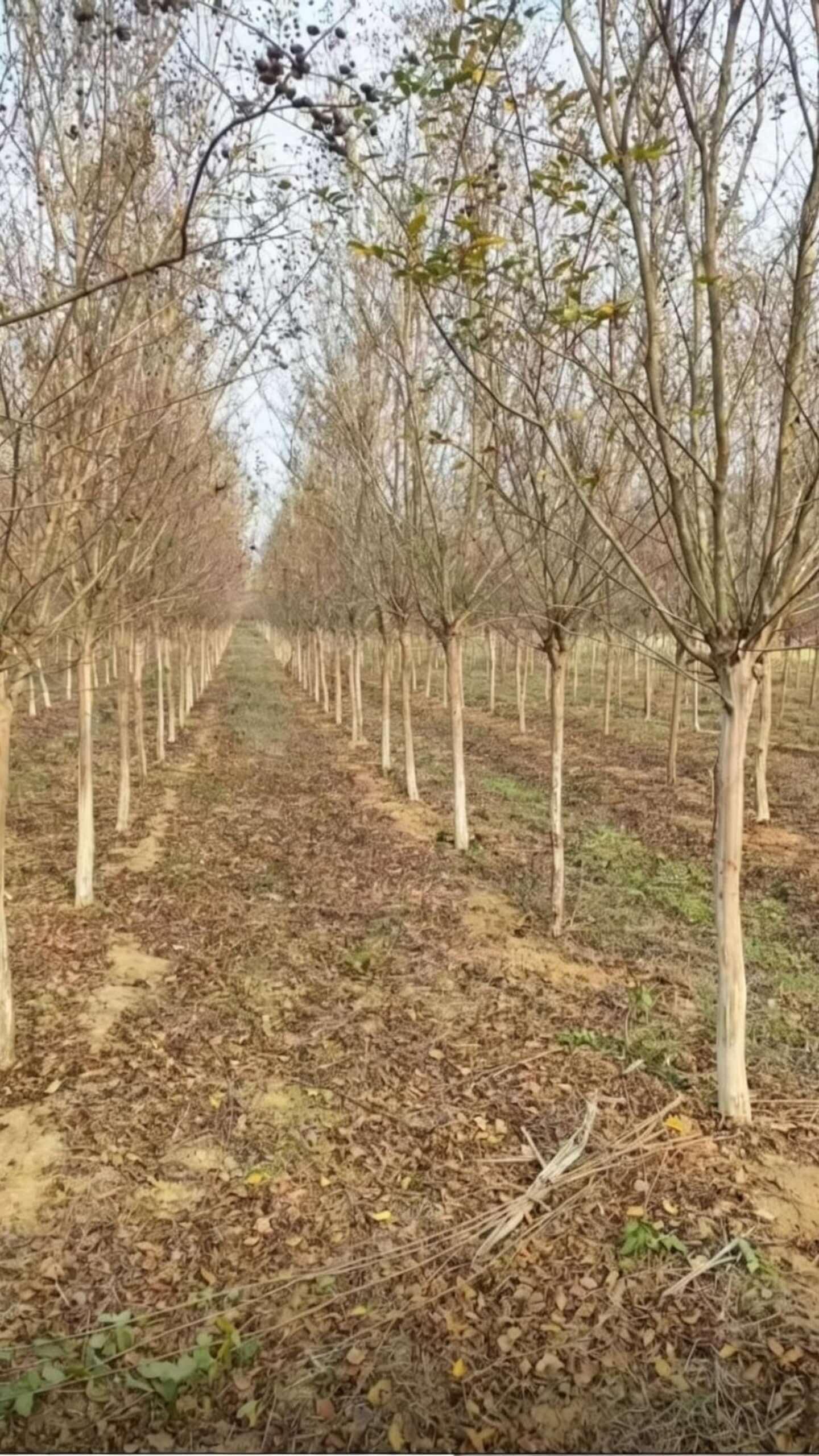
Scientific Name: Lagerstroemia indica L. (Standard Type)
Synonyms: Itch Tree, Hundred Days Red, Crape Myrtle Tree
Classification: Lythraceae, Lagerstroemia · Deciduous Tree / Primary Summer-Autumn Flowering Tree
1. Variety Characteristics
-
Plant Morphology: Altering the traditional clump-forming habit of Crape Myrtle, a tree shape with a distinct straight single stem (stem height 1.8–2.5 m) is cultivated through pruning. The bark peels off in thin flakes, leaving the old trunk smooth. The "Standard" form solves the problems of traditional clump-forming Crape Myrtles obstructing sightlines and having monotonous lower-level colors in urban landscaping.
-
Flower Performance: Panicles are terminal, with various flower colors (purple, red, pink, white), and petals have wrinkled margins. Flowering period is June–September, lasting for about a hundred days, hence the name "Hundred Days Red".
-
Seasonal Performance: Hundred days of fresh flowers in summer and autumn → autumn leaves turn red/orange → vigorous, smooth skeleton to enjoy in winter.
2. Ecological Habits
-
Light: Strongly heliophilic species, prefers full sun. In full sun, flower colors are more brilliant and growth is more vigorous; flowers are sparse or absent in partial shade.
-
Soil: Not demanding on soil, but prefers loose, fertile, well-drained slightly acidic to neutral loam. Tolerates drought, cold, and salt-alkali; avoids waterlogging.
-
Resistance: Strong resistance to sulfur dioxide, hydrogen fluoride, and chlorine gas. Has dust-absorption capabilities, making it suitable for industrial/mining areas and road greening.
3. Landscape Application Scenarios
-
Street Tree: Used along non-motorized lanes or narrower walkways to increase summer floral color.
-
Lawn Specimen/Mass Planting: Planted in green spaces or squares, with hedges or color blocks below to form layers of flowers at the top, trunk in the middle, and leaves at the bottom.
-
Building Entrances/Courtyards: Straight and elegant tree posture, suitable for modern and Chinese style garden accents.
4. Seedling Quality Indicators (Example — Premium Large Standard Seedling)
5. Planting and Maintenance Points
-
Planting Period: Best before spring budding or after late autumn leaf fall. Large seedlings must be moved with a large root ball.
-
Pruning: Heavy pruning after flowering. In winter, current-year branches should be cut back (retaining 2–3 buds) to encourage more strong new branches and more profuse flowering the following year.
-
Water and Fertilizer: Prefers fertilizer. Apply nitrogen fertilizer once in early spring and once before flowering. Apply organic fertilizer (manure or oil cake) once before winter.
-
Cold Protection: Although relatively cold-resistant, new transplants in the north need their trunks wrapped for protection during the first one or two years.
| Item | Specifications |
|---|---|
| DBH / Stem Diameter | Φ 4 cm / Φ 5 cm / Φ 6 cm (graded as requested) |
| Height (H) | 200-350 cm (matched with DBH) |
| Crown Width (P) | ≥ 120-200 cm, well-rounded crown, no lopsided growth |
| Branching Point | Uniform (usually 120 cm / 150 cm, as requested), 3-5 main branches in layers |
| Root Ball Specs | 8-10 times DBH, intact roots |
| Quality Requirements | Grafted seedling, well-healed union; smooth bark, no damage; no scale or sooty mold; specify color (Pink/Purple/White) |