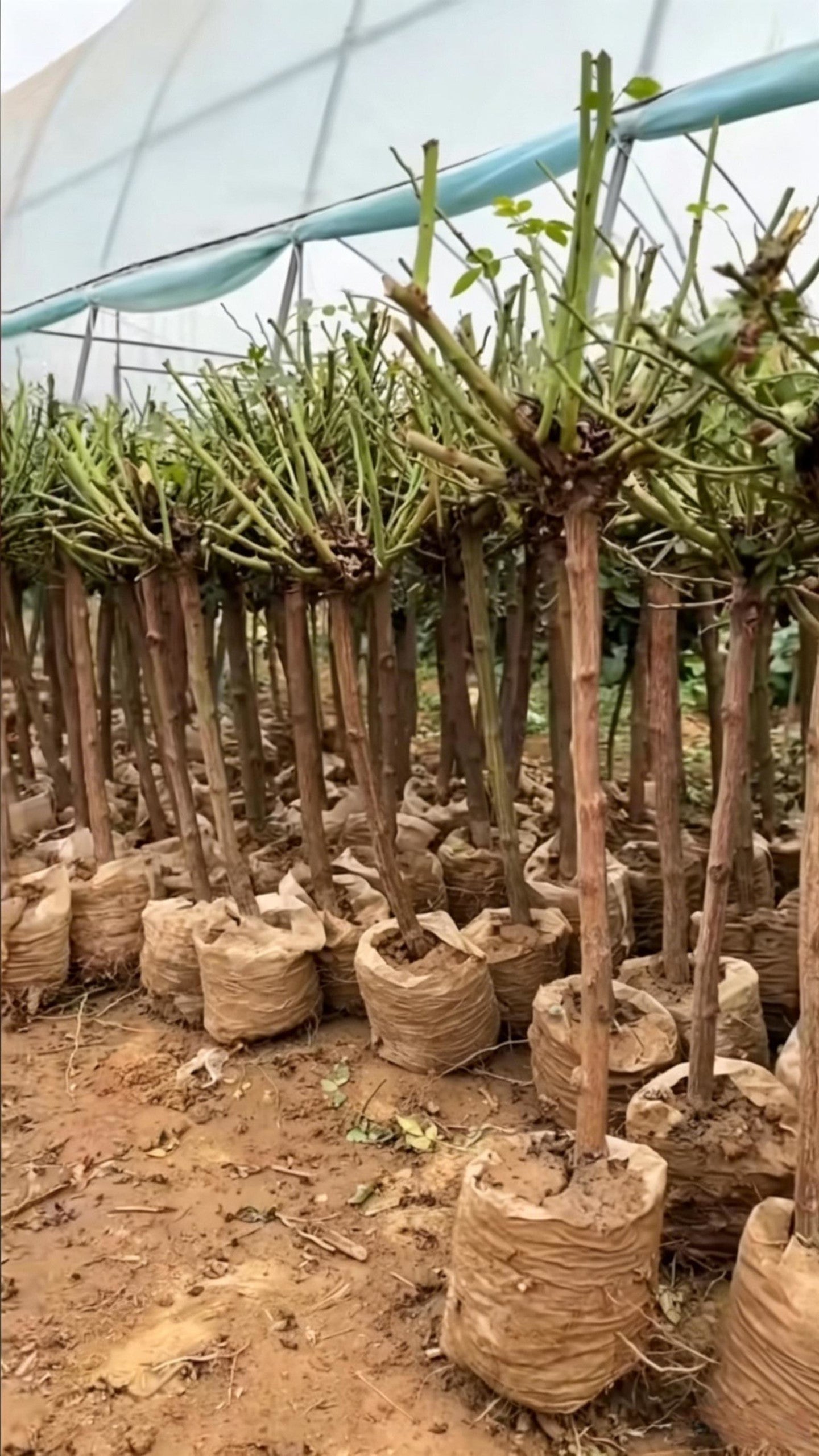
Scientific Name: Rosa hybrida Hort. (Grafted on the trunk of Rosa multiflora or Rosa canina)
Aliases: Tree Rose, Lollipop Rose, Rose Tree
Classification: Rosaceae, genus Rosa · Deciduous/Semi-evergreen small tree-like shrub (Grafted topiary) / Ornamental topiary plant
1. Variety Characteristics
-
Structure: Composed of a rootstock trunk (usually 0.6–1.2 m high, typically R. multiflora var. cathayensis or R. canina) + modern rose cultivars (Grandiflora/Floribunda) grafted at the top, forming a "lollipop" tree shape.
-
Plant Morphology: The main trunk is straight and smooth (green or with residual thorns); the crown forms at the graft site (umbrella or hemispherical shape), with blooms at 60–120 cm; leaves are odd-pinnate with 3–5 glossy dark green leaflets; stems have hooked prickles.
-
Flower Performance: Flowers are solitary or clustered; color depends on the scion variety (red, pink, yellow, white, bicolor, etc.); blooming period is from April to November (repeat-flowering, peak in spring and autumn); most varieties are fragrant.
-
Seasonal Performance: New leaves and first blooms in spring → continuous flowering in summer and autumn → deciduous in winter (partially evergreen in warmer regions), with a full crown at the graft site.
2. Ecological Habits
-
Light: Strongly heliophilous; best flowering requires ≥ 6 hours of direct sunlight daily; shade leads to fewer flowers, higher disease susceptibility, and sparse crowns.
-
Soil: Prefers loose, fertile, organic-rich, well-drained slightly acidic to neutral sandy loam (pH 6.0–7.0); avoids waterlogging and alkaline soil.
-
Temperature: Optimum growth temperature 15–26°C; tolerates short-term low temperatures of -10 to -15°C (open field south of North China; cold regions require root hilling or trunk wrapping in winter); growth slows above 30°C.
-
Resistance: Relatively drought-tolerant; common diseases include black spot and powdery mildew; common pests include aphids, spider mites, and stem sawflies; requires regular pruning and disease prevention.
3. Landscape Application Scenarios
-
Entrance/Axis Symmetrical Planting: Symmetrical rows at main entrance or along pedestrian axes; provides a strong sense of ceremony with long flowering and adjustable colors.
-
Specimen/Group Planting: Solitary planting in the center of squares, lawn corners, or flower borders; the tree shape is highly iconic.
-
Mid-layer in Flower Borders: Planted in the middle or back of flower borders, paired with perennials (Salvia, Echinacea, etc.) to create vertical layers.
-
Container Display: Grown in thickened plant bags or ceramic pots for symmetrical display at hotel entrances or sales office terraces.
4. Nursery Stock Quality Indicators
| Item | Specifications |
|---|---|
| Trunk Height (Graft Point) | 60 cm / 80 cm / 100 cm (per design) |
| Crown Width (P) | ≥ 30–50 cm (initial) / 40–60 cm (established) |
| Trunk Diameter (Rootstock) | Rootstock diameter below graft point ≥ 2–3 cm; trunk straight and free of bends |
| Grafting Requirements | Smooth healing at graft site, no constriction; pure scion variety (specify color: red/pink/yellow/bicolor, etc.); 3–5 main branches to form the crown |
| Container/Root Ball | Container seedlings (20–25 cm gallon pot or plant bag) with intact roots; field-grown root ball Ø ≥ 30–40 cm |
| Quality Requirements | Free of Phylloxera and serious black spot/powdery mildew; full buds; no mechanical damage to the main trunk |
5. Planting and Maintenance Points
-
Planting Season: Best after leaf fall in late autumn or before budding in early spring; container plants can be planted year-round (avoid peak summer heat).
-
Support & Staking: Newly planted standard roses must be secured with stakes (to prevent wind shake affecting graft healing); remove after the root system is anchored (usually 1 year).
-
Pruning: Heavy pruning during winter dormancy (leaving 2–4 buds on last year's branches to promote new blooms); deadhead promptly during the growing season; remove rootstock suckers (Rosa basal shoots) immediately.
-
Water & Fertilizer: Thoroughly water after planting; apply thin fertilizer frequently during the growing season (high Phosphorus/Potassium before blooming); allow soil to dry slightly between waterings; avoid waterlogging.
-
Pest & Disease Control: Regular preventive spraying for black spot, powdery mildew, aphids, and spider mites starting in spring; prune and remove branches affected by stem sawflies immediately.