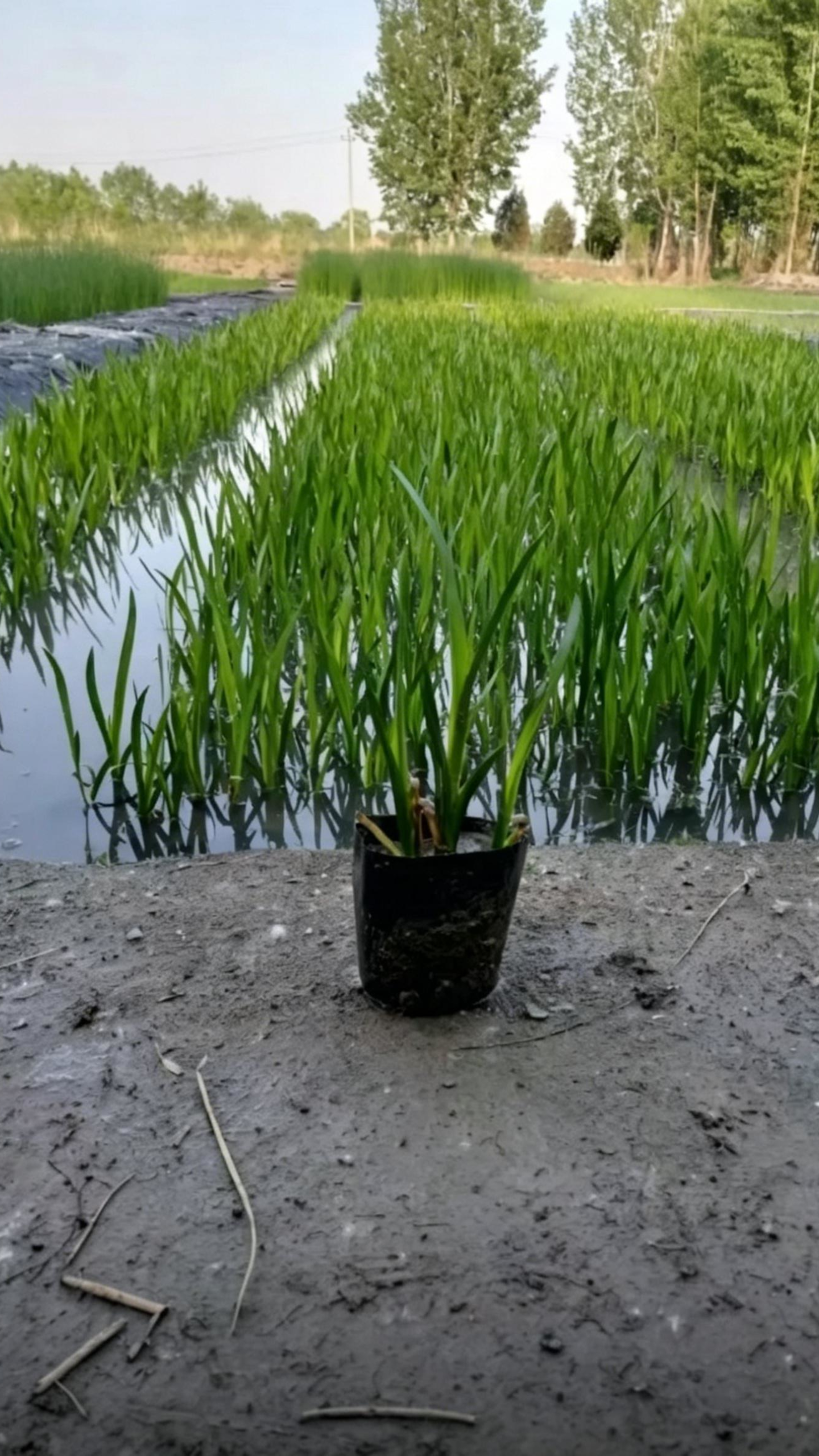
Scientific Name: Iris pseudacorus L.
Common Names: Yellow Iris, Water Flag, Yellow Water Iris (Commonly known as "Shuichangpu" in engineering, distinct from Acorus gramineus)
Classification: Iridaceae, Iris genus · Perennial emergent aquatic herb / Wetland ornamental flower
⚠️ Engineering Note: In landscaping water systems, "planting Changpu" usually refers to this species (Yellow Iris). If the client specifically refers to Acorus gramineus (fine leaves, strong fragrance, shade-loving in streams), notes are provided at the end; it is recommended to check design drawings during bidding.
1. Variety Characteristics
-
Plant Morphology: Thick creeping rhizomes underground; leaves basal, sword-shaped, 50–90 cm long, 1–2 cm wide, with a prominent midrib, grayish-green; flower stalks higher than leaf clusters, bearing 1–3 flowers at the top; 6 tepals (outer 3 hanging with yellow-brown markings, inner 3 upright and pure yellow), flower diameter 8–10 cm, flowering from April to June; capsule long cylindrical, three-angled, seeds angular.
-
Common Similar Varieties:
-
I. pseudacorus 'Variegata' (Variegated Yellow Iris, leaves with white/yellow stripes, primarily for foliage)
-
Siberian Iris (I. sibirica, slightly moisture-tolerant but prefers moist soil rather than typical emergent conditions, flowers blue-purple/white)
-
-
Seasonal Performance: Leaves emerge in spring → Peak flowering in early summer → Upright green leaves in summer and autumn → Partially wither after frost, rhizomes overwinter; evergreen or semi-evergreen in Central and East China.
2. Ecological Habits
-
Water Level Requirements: Thrives in saturated moist mud to shallow water depths of 5–30 cm (tolerates 50 cm short-term); can be planted at the water line or in moist mud on banks; extremely adaptable.
-
Light: Prefers light, best flowering under full sun; also tolerates semi-shade (slightly reduced flowering), avoid dense shade.
-
Soil: Prefers loose, fertile, moisture-retentive clayey loam, pond mud, or swamp soil rich in organic matter; tolerates light salinity and short-term pollution.
-
Temperature: Optimum 15–28°C; underground rhizomes can withstand -15 to -20°C (non-freezing mud) for overwintering; cultivated in open ground in most parts of the country.
3. Engineering Application Scenarios
-
Revetment Shallow Water Zones: Planted in patches along waterlines of artificial lakes, rivers, and ponds to soften hard revetments; forms emergent plant belts with Lotus, Pickerelweed, Bulrush, and Variegated Giant Reed.
-
Constructed Wetlands/Rain Gardens: Used at inlets or detention areas of surface flow wetlands to adsorb nitrogen and phosphorus and promote suspended solids settlement, providing both water purification and yellow flower aesthetics.
-
Sunken Gardens/Ecological Ditches: Planted in stagnant sections of grassed swales or stepped wet ponds to fix soil and protect banks.
-
Specialty Garden Nodes: Variegated varieties ('Variegata') used for premium water features and accents beside entrance water basins.
4. Sapling Quality Indicators
|
Project Name |
Specifications |
|---|---|
|
Supply Form |
Rhizome segments with buds / Container seedlings (Diameter 10–14 cm, with 3–5 leaf clusters) |
|
Rhizome Requirements |
Buds plump, no rot, no serious insect damage; each clump ≥ 2–3 buds with fibrous roots |
|
Container Seedling Requirements |
Leaf cluster height ≥ 30–50 cm, with 3–5 expanded leaves, obvious new buds, roots not pot-bound, no serious leaf spot |
|
Variety Labeling |
Must be labeled as Yellow Iris (standard yellow flower) or Variegated Yellow Iris (if applicable) |
|
Supply Period |
After soil temperature rises in spring (usually March to early May in Central China); container seedlings can be extended |
5. Planting and Maintenance Key Points
-
Planting Method: Plant container seedlings with soil into moist mud or shallow water; bury rhizomes flat and cover with 3–5 cm of mud, with buds slightly exposed; maintain 3–5 cm shallow water or saturated moisture initially, adjust to design water depth after survival.
-
Fertilization: Mix decomposed organic fertilizer or specialized aquatic plant fertilizer into base; top-dress with phosphorus and potassium fertilizer before flowering.
-
Pruning and Renewal: Cut flower stalks after blooming; prune yellowed old leaves in late autumn or early spring; divide and replant every 2–3 years.
-
Overwintering Management: Leave root remnants in place for overwintering; cover with straw in cold areas.
-
Pests and Diseases: Occasional iris rust, soft rot, and aphids; maintain ventilation, remove infected leaves, and use targeted medicine.