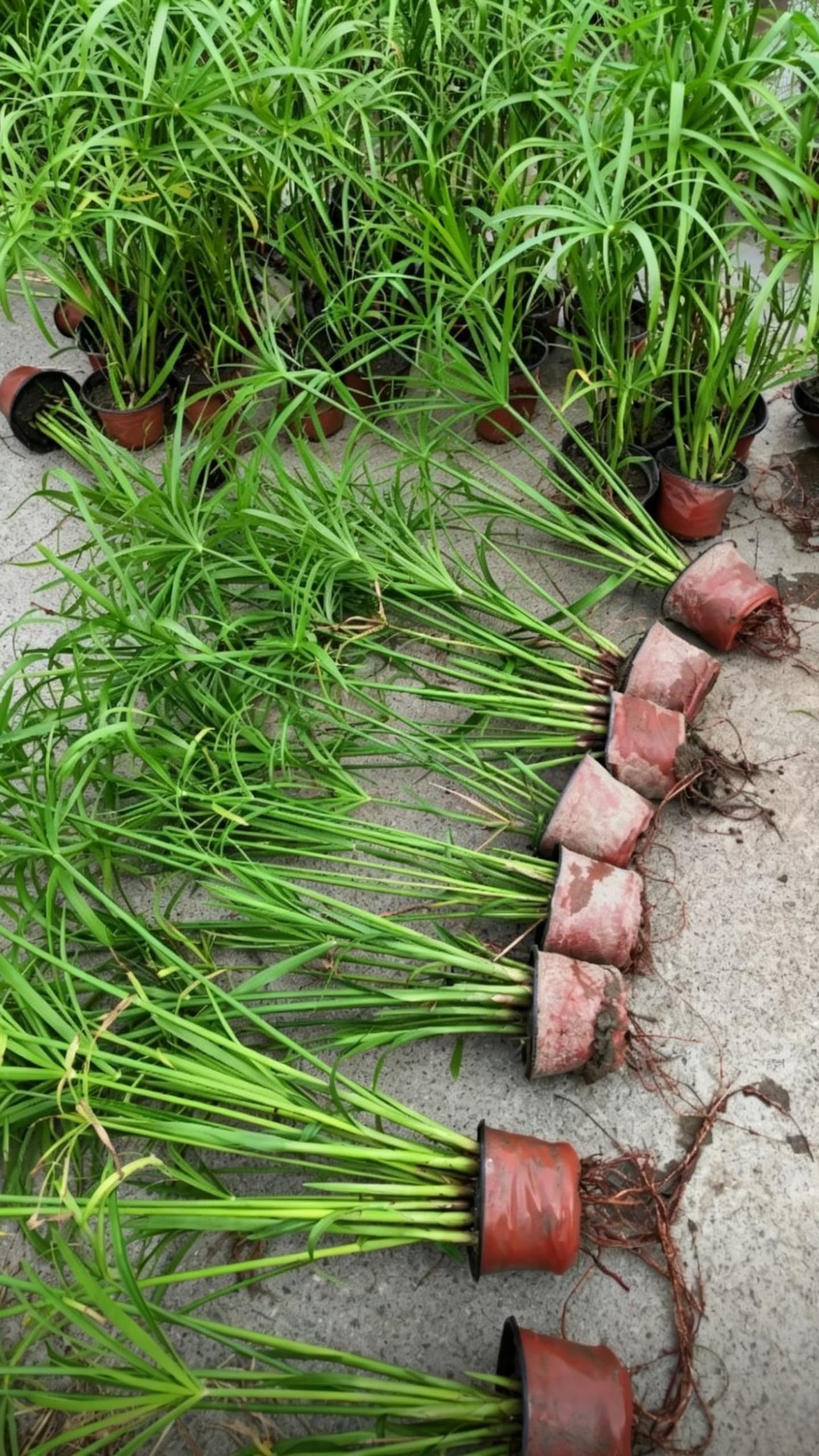
Scientific Name: Cyperus alternifolius subsp. flabelliformis (Rottb.) Kük. [often referred to as Cyperus involucratus Rottb. or C. alternifolius]
Common Names: Windmill Grass, Umbrella Plant, Water Bamboo (misnomer in some regions), Flabellate Galingale
Classification: Cyperaceae, Genus Cyperus · Perennial hygrophyte/emergent herb / Ornamental aquatic landscape plant
1. Varietal Characteristics
-
Plant Morphology: Features short underground rhizomes; aerial stems are clustered, erect, acutely triquetrous, and smooth, reaching heights of 60–120 cm (up to 150 cm). The stem tip is whorled with 8–15 linear bracts (10–25 cm long), arranged in a radiating umbrella or windmill shape. Tiny yellow-green flowers are clustered in spikes axillary to the bract bases (blooming summer to autumn, or year-round in greenhouses). Rarely produces seeds; commercially propagated via division or cuttings.
-
Cultivars: The Mini Umbrella Papyrus is a common dwarf variety (30–50 cm tall) used for detailed water features or potted displays.
-
Seasonal Performance: Evergreen when planted in the ground (Central/South China) → Aerial parts wither after frost (requires protection or annual replanting in North China); underground rhizomes can tolerate short-term low temperatures.
2. Ecological Habits
-
Water Level: Adapted to shallow water or saturated moist environments. Ideal water depth is 5–20 cm (submerging 1/3 of the plant height). It can also tolerate total immersion in shallow water (≤30 cm) or growth in permanently moist mud. Avoid complete drought and rapid currents.
-
Lighting: Prefers full sun but is also semi-shade tolerant (grows well in light shade; plant form is more compact under strong light). Long-term deep shade results in weak, thin stems prone to lodging.
-
Soil: Prefers loose, fertile pond mud rich in organic matter, swamp soil, or clay loam with good water retention. Also suitable for hydroponics.
-
Temperature: Optimal growth temperature is 18–28°C. Growth slows below 10°C; aerial parts wither below 5°C. Rhizomes can tolerate short periods of 0 to -5°C (open ground in Central/East China; container cultivation indoors or annual replanting suggested for North China).
3. Landscape Application Scenarios
-
Waterfront Revetments: Planted by pond edges, rock crevices, or along artificial streams to create a serene, Zen-like landscape effect.
-
Ecological Wetlands: Provides water purification effects; suitable for constructed wetland projects.
-
Courtyard Decor/Potted: Unique shape makes it an ideal indoor accent or landscape node ornament.
4. Quality Indicators (Example - Commercial Emergent Stock)
5. Planting and Maintenance Points
-
Planting Season: From spring warming through autumn; can be planted year-round as long as ambient temperature remains above 15°C.
-
Pruning: Regularly remove yellowed or withered old stems to maintain aesthetics. If frost-damaged, cut back to the base after spring warming to encourage new growth.
-
Water and Fertilizer: Ensure roots are permanently moist or in shallow water. Apply dilute fertilizer (such as compound granules) every 1–2 months during the peak growing season.
-
Overwintering: In regions where winter temperatures drop below 5°C, move indoors or cover the base with thick soil or straw to protect the rhizomes.