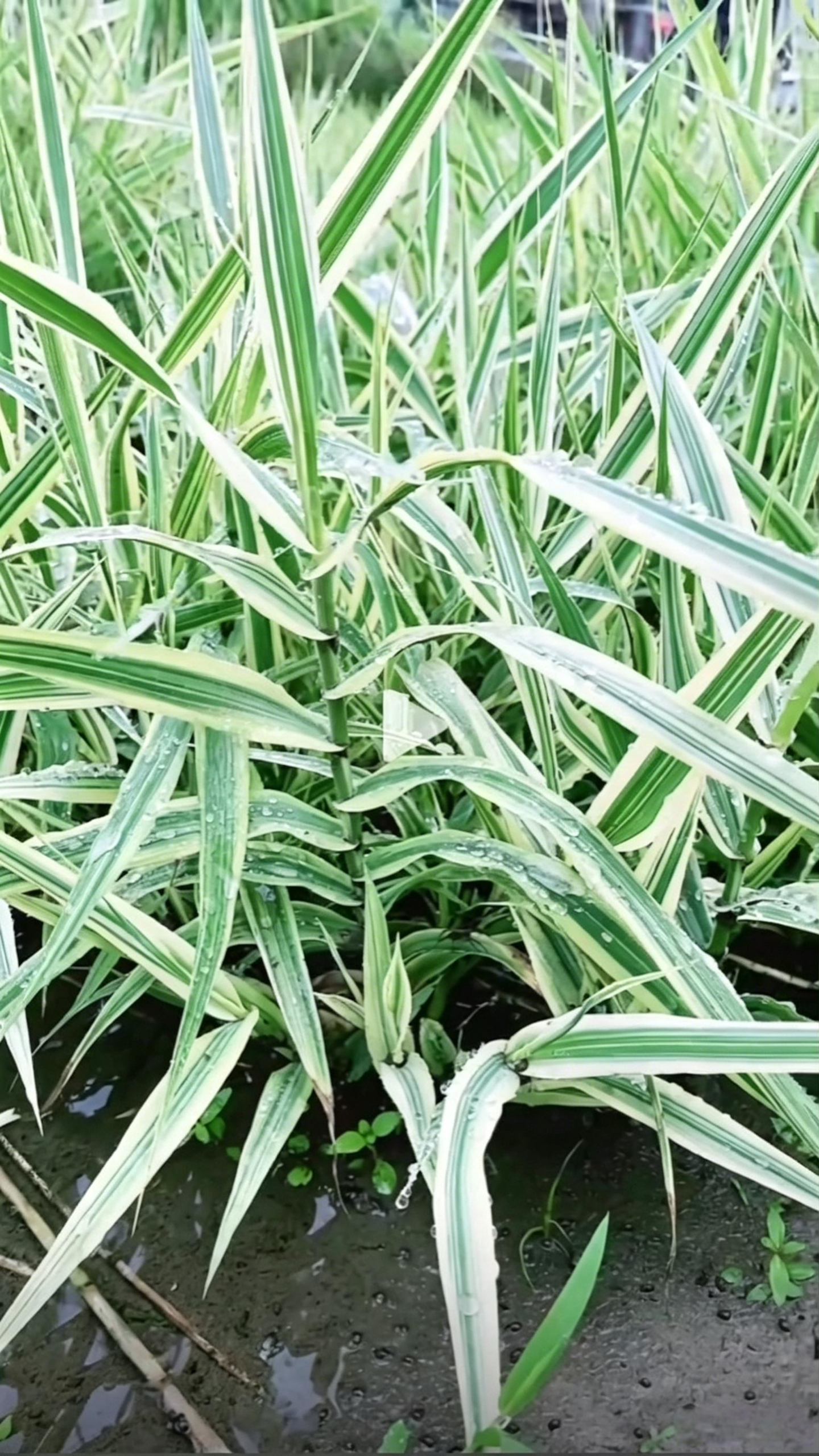
Scientific Name: Arundo donax var. versicolor (Mill.) Stokes 〔Arundo donax 'Variegata'〕
Aliases: Variegated Reed, Striped Giant Reed, Ribbon Grass
Classification: Poaceae, Arundo genus · Perennial tall rhizomatous herb / Hygrophyte and shallow water ornamental plant
1. Variety Characteristics
-
Plant Morphology: Features thick, creeping underground rhizomes; aerial stems are clustered and erect, 2–4 (up to 5) m tall, 1–2 cm in diameter, with white waxy powder at nodes; leaves are alternate and long-lanceolate, 30–60 cm long, 2–5 cm wide. The green leaf surface features striking longitudinal creamy white or pale yellow wide stripes (variegation); leaf margins are rough. Large terminal panicles are pale purplish-brown to yellowish-brown (blooming August–October, often sterile or with non-viable seeds—landscape seedlings mainly rely on vegetative propagation).
-
Difference from the Parent Species: The original species (Green Giant Reed) has entirely green leaves. The variegated variety is primarily grown for its foliage, is slightly shorter than the parent species, and its stripes become more vivid under strong light.
-
Seasonal Performance: New spring leaves are emerald green with white edges → stems and leaves are upright with clear stripes in summer and autumn → upper parts gradually turn yellowish-brown after frost → aerial parts wither in winter while underground rhizomes overwinter.
2. Ecological Habits
-
Water Level Requirements: Suitable for riverbanks, lakeside wetlands, and shallow water areas; thrives in saturated moist mud to shallow water depths of 10–30 cm (can tolerate up to 50 cm for short periods). It also withstands brief shallow flooding and seasonal wet-dry cycles.
-
Light: Light-loving; stripes are vivid and stems are thick under full sun. It can tolerate light partial shade, but excessive shade causes white stripes to narrow or even revert to green.
-
Soil: Highly adaptable to soil types; prefers loose, fertile, moisture-retentive clay loam, marsh soil, or silty soil in still water. Tolerates some salinity and poor soil.
-
Temperature: Optimal growth temperature is 15–30°C; underground rhizomes can tolerate -10 to -15°C (if mud does not freeze) during winter. Safe for open-field cultivation in Central and East China; in North China, root protection or annual replanting may be necessary.
3. Engineering Application Scenarios
-
Artificial Lakes/River Revetments: Planted at the edges of large water surfaces or on gentle slopes, the tall, clustered variegated foliage acts as an excellent background screen, softening shorelines and adding vertical landscape layers.
-
Wetland Parks/Aquatic Landscapes: Pairs well with Purple Loosestrife, Sweet Flag, and Lotus at varying heights to create natural, wild aquatic plant communities.
-
Screening: Due to its height and rapid growth, it is often used to hide revetment pipes, pump stations, or simple facilities.
4. Quality Indicators (Example - Large Emergent Seedling)
| Item Name | Specifications |
|---|---|
| Age / Form | 1–2 year old division seedling / Nutrient pot seedling (Recommended) |
| Height (H) | 1.5–2.5 m (as background) / 1.0–1.5 m (can be pruned to 60–80 cm before shipping) |
| Diameter / Tillering | ≥ 3–5 stems per cluster, rhizomes thick and rot-free |
| Container | Pot diameter 15–20 cm / 20–25 cm, fully developed root system |
| Quality Requirements | Vivid leaf stripes, free of pests and diseases, vigorous growth |
5. Planting and Maintenance Key Points
-
Planting Period: Best from before spring budding until early summer; container seedlings can be planted year-round as long as the ground is not frozen.
-
Pruning: After withering in winter, cut the aerial parts down to 10 cm above the base to promote tidy new growth the following year. If pure green branches appear during the growing season, remove them from the base promptly.
-
Water and Fertilizer: High water demand during peak growth; maintain shallow water or saturation. Apply a small amount of compound fertilizer or urea every 1–2 months to promote lush foliage.