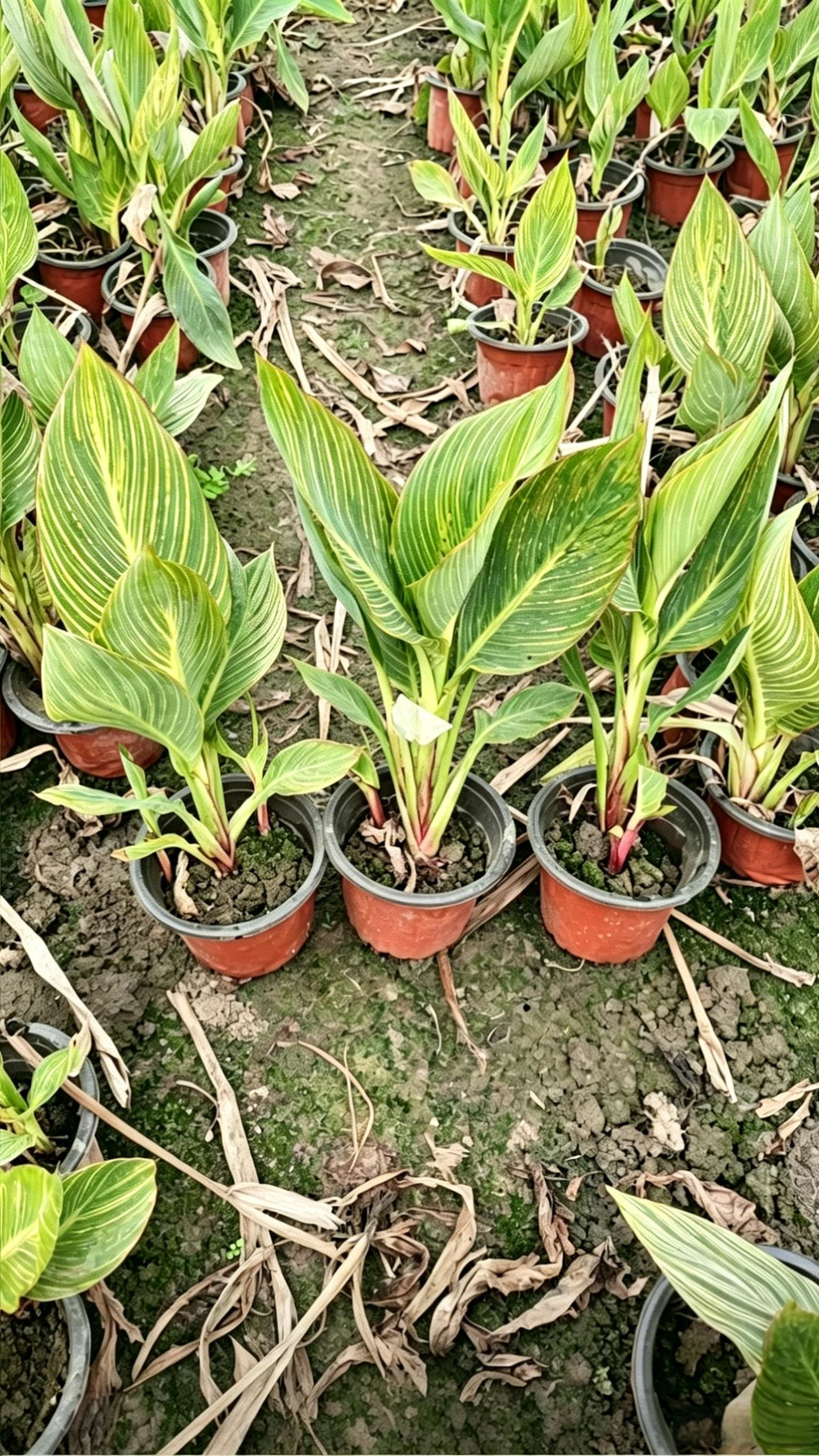
Scientific Name: Canna indica L. (Large-flowered Canna Group Canna × generalis L.H. Bailey)
Aliases: Red/Yellow Canna, Variegated Canna, Spotted Leaf Canna
Classification: Cannaceae, Canna genus · Perennial bulbous (rhizomatous) herb / Wetland and shallow water ornamental flower
1. Variety Characteristics
-
Plant Morphology: Features large fleshy rhizomes underground; erect stems above ground, 80–150 (up to 200) cm tall; large leaves, alternate, oblong-lanceolate, 30–60 cm long, entire margin, arcuate primary veins.
-
Common Canna: Leaves are all green, dark green, or with a purple tinge; large, asymmetric flowers in colors including red, yellow, orange-red, pink, and bi-color (blooming period June–October, longer in warm regions).
-
Variegated Canna (Canna × generalis 'Striata' / 'Tropicanna', etc.): Leaves feature yellow, white, or red-brown stripes or patterns (ornamental leaf varieties); flowers are mostly orange-red or yellow, primarily valued for foliage, secondarily for flowers.
-
-
Fruit: Capsule with tuberous protrusions, seeds are black and hard (horticultural propagation is mostly done by division).
-
Seasonal Performance: Sprouting in spring → Peak bloom/colorful foliage in summer and autumn → Above-ground parts wither after frost, underground rhizomes overwinter.
2. Ecological Habits
-
Water Level Requirements: Suitable for moist, nutrient-rich environments; can be planted as a wetland flower in saturated moist mud, or tolerate water depth of 5–15 cm in shallow water (should not exceed 30 cm for long-term immersion); avoid complete drought and fast-flowing water.
-
Lighting: Strong heliophyte, requiring full sun (≥6 h direct light) for profuse flowers and vibrant leaves; variegated varieties show clearer patterns with stronger light, patterns fade and flowers decrease in shade.
-
Soil: Prefers loose, fertile, organic-rich clay loam with good water retention and drainage, or improved pond mud; tolerates a certain level of fertility.
-
Temperature: Prefers warm and humid climates, not cold-resistant. Above-ground parts freeze at 0–2°C, rhizomes can tolerate -5°C (under mulch protection); in northern regions, rhizomes must be dug up and stored indoors for winter.
3. Engineering Application Scenarios
-
Waterline Greening: Planted along river and pond banks, stone crevices of revetments, and sides of artificial streams, providing bright colors and long flowering periods, softening hard shorelines.
-
Flower Border/Bed Background: Due to its height, often used as the background or focal point of wetland flower borders, paired with Acorus, Pontederia cordata, and Schoenoplectus tabernaemontani.
-
Foliage Composition: Variegated Canna uses its eye-catching leaf colors to provide stable landscape color blocks during seasons lacking flowers.
4. Quality Indicators (Example - Division Container Seedling)
| Item | Specification |
|---|---|
| Seedling Age/Form | 1–2 year old division seedling / Nutritive pot seedling (Project recommendation) |
| Height (H) | 60–100 cm / 100–150 cm (Leaves can be properly pruned before shipping) |
| Clump Diameter/Bud Count | Each clump ≥ 2–3 buds, thick rhizomes, plump bud points |
| Container Requirements | Pot diameter 15–18 cm / 18–22 cm, well-developed root system |
| Quality Requirements | No leaf roller damage (key pest for Canna), intact leaves, pure flower color (or clear leaf patterns) |
5. Planting and Maintenance Key Points
-
Planting Period: Best from after the last spring frost to summer; year-round construction possible in South China.
-
Pruning: Timely remove faded flower stalks (to promote lateral buds to bloom again) and withered old leaves; clean up residue after above-ground parts wither in winter.
-
Water and Fertilizer: Loves fertilizer and water; keep soil moist during growth; top-dress with decomposed organic fertilizer or compound fertilizer every 1–2 months.
-
Pests and Diseases: Focus on controlling Canna leaf rollers (pay attention to cleaning residue and targeted spraying).