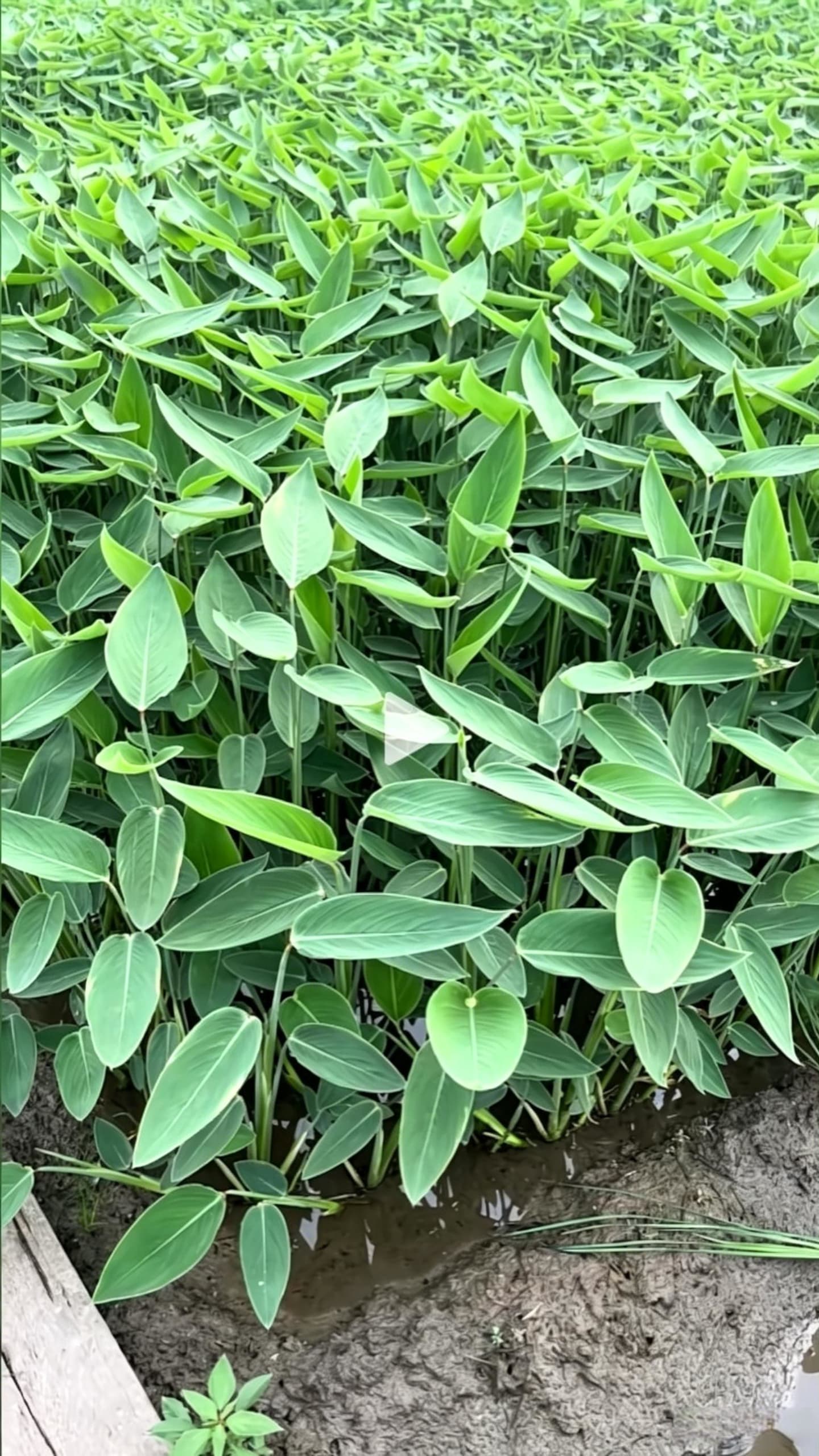
Scientific Name: Thalia dealbata J. Fraser
Common Names: Water Canna, Thalia, Hardy Water Canna
Classification: Marantaceae, Thalia genus · Perennial emergent aquatic herb / Large wetland ornamental flower
1. Variety Characteristics
-
Plant Morphology: Thick rhizomes underground; upright and tall aerial stems, 1–2 (up to 2.5) m high, covered with white powder, appearing grayish-blue; leaves basal and cauline, long lanceolate or long elliptic-lanceolate, 30–60 cm long, 10–20 cm wide, the back of the leaf is often covered with white frost, resembling large bamboo or banana leaves, grayish-green; inflorescence is a panicle composed of racemes, rising above the leaf cluster, small flowers purple or light violet with dark spots, flowering from June to October.
-
Seasonal Performance: Sprouting in spring → Tall and upright grayish-green foliage + purple flower spikes in summer → Aerial parts wither after frost, underground rhizomes overwinter; can be cultivated in open ground in Central and East China.
2. Ecological Habits
-
Water Level Requirements: Suitable for shallow water areas or saturated moist mud, with an ideal water depth of 10–30 cm (up to 50 cm in still water); also tolerates short-term shallow flooding and seasonal wet-dry alternating; avoid complete drought.
-
Light: Prefers light; plants are tall with many flower spikes under full sun; tolerates light partial shade, but excessive shade leads to thin stems prone to lodging.
-
Soil: Prefers clayey pond mud, river mud, or swamp soil rich in organic matter; tolerates moderate fertility.
-
Temperature: Optimum growth temperature is 20–30°C; growth stops when the temperature is <10°C; underground rhizomes can withstand -5 to -8°C (non-freezing mud) for overwintering; open field in South and East China, soil covering or replanting is recommended in North China.
3. Engineering Application Scenarios
-
Shallow Water Zones of Artificial Lakes/Ponds: Planted in patches along shallow water revetments; tall grayish-green leaf clusters provide a tropical feel, softening hard shorelines; combines with Lotus, Pickerelweed, and Bulrush to form emergent plant layers.
-
Constructed Wetlands/Purification Ponds: Used in stagnant areas of surface flow wetlands to adsorb nitrogen and phosphorus while providing landscaping functions.
-
Ecological Floating Islands/Revetments: Planted on floating island substrates or gentle slope moist soil to fix soil, protect shores, and provide bird habitats.
-
Specialty Gardens/Resorts: Planted in tropical-style water gardens or near watersides of homestay courtyards to create a southern atmosphere.
4. Sapling Quality Indicators
|
Project Name |
Specifications |
|---|---|
|
Supply Form |
Underground rhizome segments with buds / Container seedlings (Diameter 15–20 cm, height 60–100 cm or more) |
|
Rhizome Requirements |
Buds must be plump and clear, no rot; each clump ≥ 2–3 buds with fibrous roots |
|
Container Seedling Requirements |
3–5 upright leaves/stems, normal grayish-green leaves with white frost; root system well-developed and not pot-bound; no serious pests or diseases |
|
Variety Labeling |
Must be labeled as Thalia dealbata (purple flower, gray leaf type), not other Thalia species |
|
Supply Period |
After soil temperature rises in spring (usually April–May in Central China) |
5. Planting and Maintenance Key Points
-
Planting Method: Plant container seedlings with soil into shallow water mud or saturated moist mud; bury rhizomes flat and cover with 3–5 cm of mud, with buds slightly exposed; maintain 5–10 cm shallow water initially, adjust to design water depth after survival/leaf expansion.
-
Fertilization: Mix decomposed organic fertilizer or specialized aquatic plant fertilizer into the base; apply mud-balled fertilizer deep during peak growth periods.
-
Renewal and Rejuvenation: Divide and replant every 2–3 years depending on density to prevent central balding from overcrowding.
-
Overwintering Management: Cut back aerial parts after they wither in winter (leave 10–15 cm at the base); in cold areas, cover the root zone with straw or store rhizomes in moist sand to replant the following spring.
-
Pests and Diseases: Very few; occasionally aphids damage tender shoots, wash with clean water or use specific medicine; promptly remove withered old leaves to prevent water quality deterioration.